
NEET UG 2026 (National Eligibility cum Entrance Test – Undergraduate) will be held on May 3, Sunday.
The exam is conducted by the National Testing Agency (NTA) for admission to medical courses after Class 12.
Here is a comprehensive guide for students and everything to know about the exam…
What are the timings for the exam?
NEET UG is conducted across hundreds of exam centres throughout India and even a few abroad. The NTA is very strict about reporting times. The schedule they have set is:
- Reporting starts around 11:00 AM
- Last entry to exam hall is 1:30 PM (strict cutoff)
- Exam begins at 2:00 PM
Which courses is NEET UG required for?
- The courses under NEET UG include:
- MBBS (Bachelor of Medicine & Bachelor of Surgery)
- BDS (Dental)
- B.V.Sc & AH (Veterinary sciences)
- AYUSH courses like BAMS, BHMS
- BSc nursing programs
What to wear, carry and why students must reach early
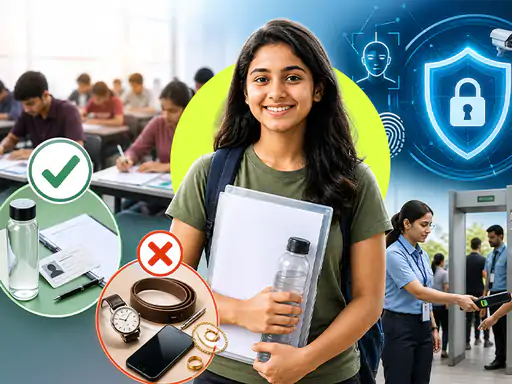
The NTA has issued a fresh advisory asking candidates to be extra careful about what they wear and carry to the exam centre. These rules are meant to ensure smooth frisking, biometric verification and a fair exam environment.
1. Wear simple clothes, avoid anything bulky
Students have been advised to wear light and simple clothes. Half sleeves are preferred, but if someone needs to wear full sleeves or woollen clothes, they should report much earlier because security checking may take more time. For footwear, NTA has recommended slippers or low-heeled sandals so that entry frisking remains quick and hassle-free.
2. Only limited items allowed inside
Candidates can carry only essential documents and a transparent water bottle. Religious or faith-based articles are allowed, but students wearing them must inform authorities by reaching the centre well in advance for detailed inspection. Apart from this, no unauthorised item will be permitted.
3. Why reaching early matters this year
This year, frisking will be followed by biometric verification before entry into the exam room. NTA has said even if biometric issues arise, manual verification will be done, but this can consume time. That is why candidates are being repeatedly told not to arrive at the last minute.
NTA’s stringent anti-cheating system
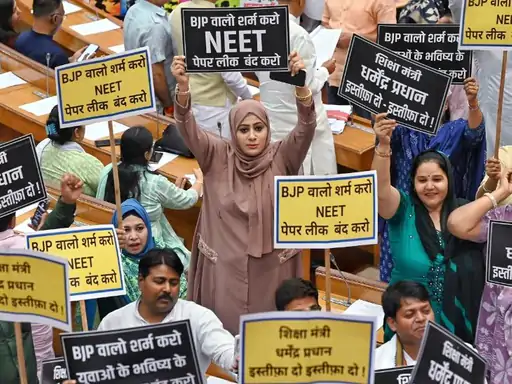
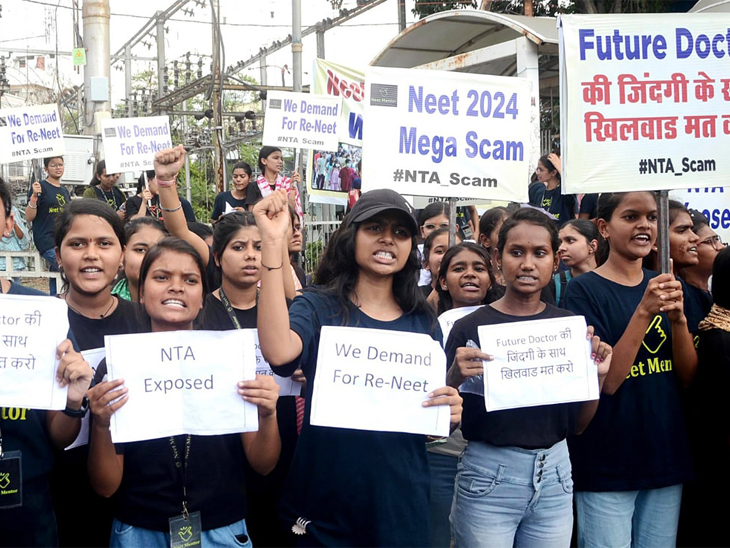
After the controversy and protests caused by the 2024 exam paper leak, the NTA bolstered its anti-cheating system with a multi-layered model.
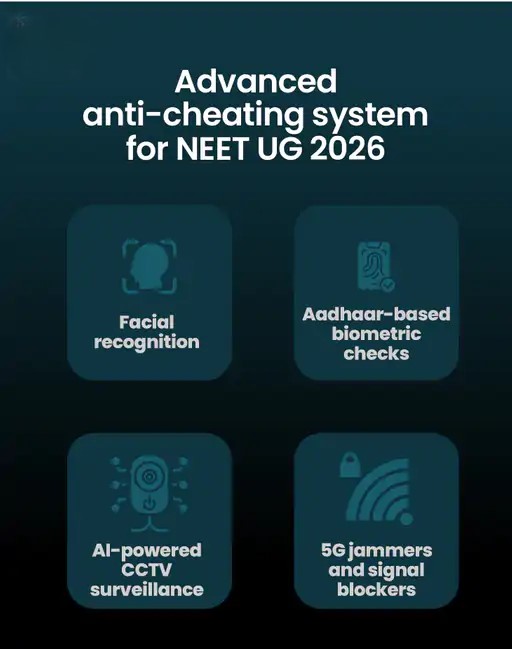
1. Facial recognition + AI verification Live photo and facial recognition are used to match candidates with application data. This prevents impersonation, ensuring the registered candidate is the one taking the exam.
2. Aadhaar-based biometric checks Fingerprint and Aadhaar authentication are conducted at entry to ensure only the registered candidate enters the exam hall.
3. AI-powered CCTV surveillance Exam halls are monitored with CCTV cameras supported by AI analytics, which can flag suspicious behaviour in real time.
4. 5G jammers and signal blockers High-frequency jammers block mobile signals, Bluetooth devices, and even 5G networks, preventing cheating through electronic communication.
5. Secure question paper handling Question papers are sealed and watermarked, opened only at the exam centre just before the test, and transported under strict monitoring, including GPS tracking in some cases.
6. Real-time monitoring and control There is continuous monitoring of candidate movement and exam hall activity, with no interruptions allowed during exam hours.
7. Strong crackdown on leaks and misinformation Fake paper leak claims are tracked and acted upon, and suspicious social media channels are reported to cybercrime authorities.
8. Police and security personnel vigilance
Police presence outside exam centres to manage crowds and prevent disturbances.
What happened in NEET UG 2024?
NEET UG 2024 was marked by allegations of question paper leaks and examination irregularities in certain regions, which raised concerns among students and parents and led to legal scrutiny and demands for investigation.
The National Testing Agency (NTA) said it reviewed the complaints and maintained that the examination process remained under strict monitoring.
These concerns later prompted the NTA to strengthen the NEET UG 2026 exam system with stricter security measures, including biometric verification, AI-based surveillance, and enhanced anti-cheating mechanisms.
Interesting facts about NEET UG
1. One of the largest exams in the world NEET is among the biggest entrance exams globally, with over 20 lakh candidates appearing every year.
2. Biology dominates the paper Out of 720 marks, Biology alone carries 360 marks, making up 50% of the exam and often deciding ranks.
3. Single exam for all medical seats NEET replaced multiple state and private exams, creating a single, uniform entrance test across India.
4. Conducted outside India too The exam is held in international centres like Dubai, Abu Dhabi, and Kathmandu for students abroad.
5. Rank differences can be tiny Thousands of students can be separated by just 1–2 marks, especially at the top ranks.
6. Cut-offs change every year While the qualifying percentile remains fixed, actual cut-off marks vary based on difficulty and overall performance.
7. Government seats are highly competitive There are far fewer government MBBS seats compared to applicants, making competition extremely intense.
8. Tie-breaking rules matter If scores are equal, ranks are decided by Biology marks, then Chemistry, then fewer incorrect answers.