

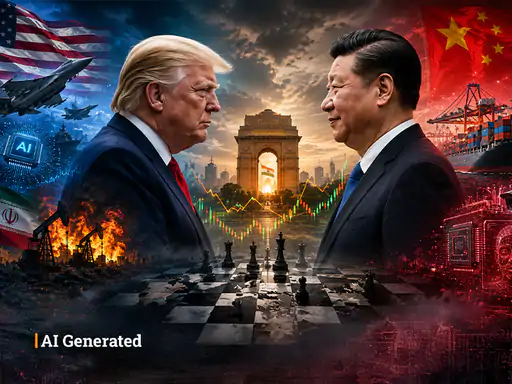
US President Donald Trump has arrived in China for a 3-day visit. This is his first visit to the nation since 2017 and comes amid markedly different global circumstances. Trump returns to an arguably even stronger China, hoping to fulfill several aims from easing geopolitical tensions, to boosting trade.
As two of the world’s most powerful leaders engage in close conversation, what’s on the agenda and how will this meeting impact New Delhi? Find out in this explainer…
Why are Trump and Xi meeting right now? What will be discussed?
Trump’s visit comes at a time of diplomatic and economic concerns for both the US and China. There are several key factors for this unease.
1. Attempt to improve economic ties after tariff debacle After months of tariff wars, both economies have started feeling strain. Their temporary agreements to ease restrictions are unlikely to hold and both leaders want to prioritise a permanent solution in the form of a solid trade deal.
2. Need for urgent solution to Hormuz crisis
The ongoing Iran crisis and threats to shipping through the Strait of Hormuz created a new shared concern:
- China depends heavily on Middle Eastern oil imports
- The US wants to prevent a wider regional war and energy shock
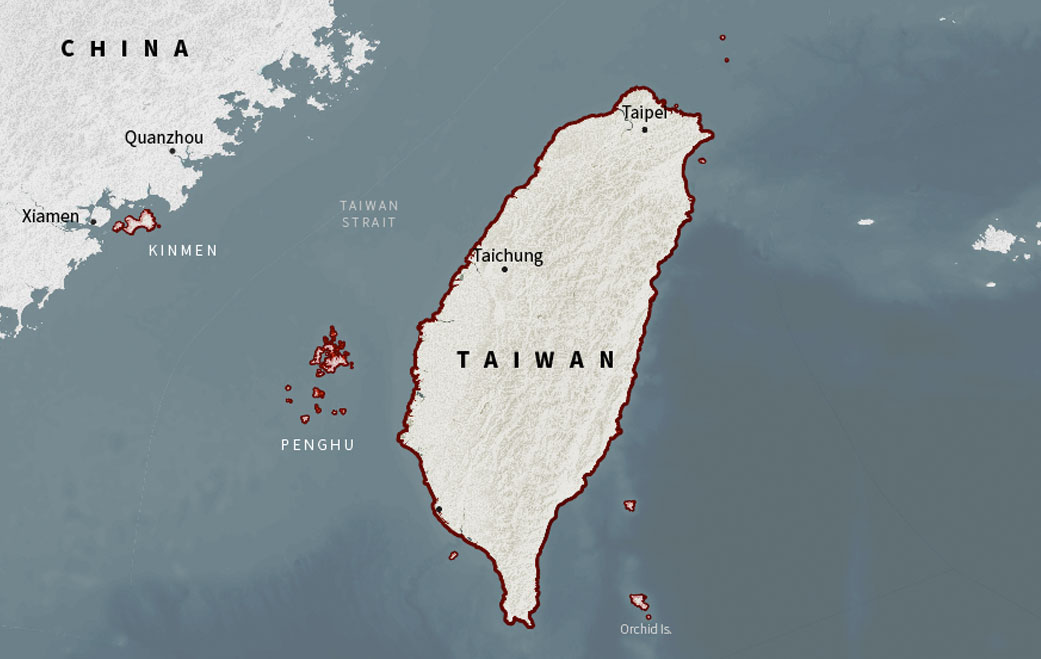
3. Bid to prevent escalation over Taiwan issue
The self-governed island nation of Taiwan is considered the single most dangerous flashpoint in US-China relations. China considers Taiwan a breakaway province that must eventually be reunified with the mainland, by force if necessary. The US is Taiwan’s biggest military backer and a key trade ally.
Both countries see the issue as tied to national credibility, military power and long-term strategic control in Asia. Over the past few years, China’s military presence near Taiwan has increased significantly. However, while both sides want to project strength, they also wish to avoid any kind of a direct military confrontation.
4. Trump needs a diplomatic win amid declining popularity
After the Iran war’s fallout, Trump desperately needs a major geopolitical win to win back some of the lost support. A successful meeting would also aid economic stability and market upturn.
5. Xi wants stability at a difficult economic moment
China has experienced an economic slowdown recently due to its:
- Weak consumer demand
- Property-sector stress
- Slowing exports
Thus, Xi wants to avoid further economic isolation and reduce the risk of additional US sanctions or tariffs.
Does China now have an upper hand in talks?
Trump turns to diplomacy after tariff threat fails
China absorbed the tariff shock better than expected. China redirected exports to other markets instead and was not forced into making any economic concessions to the US.
The US also paid a heavy economic cost. American consumers and businesses absorbed much of the tariff burden through higher costs and inflation. So, Trump is now in a weaker negotiating position and has turned to diplomacy instead of trying to strongarm China into agreeing to his demands.
Reasons for Trump’s change in approach include:
- Beijing showed it could hit vulnerable US sectors including AI and tech by tightening rare-earth exports and critical supply chains.
- That exposed how dependent US tech and defense industries still are on Chinese production.
China controls a large part of the world’s rare earth minerals used to manufacture semiconductors.
Washington’s weakened bargaining position post-Iran war
Ahead of his visit, Trump called Xi ‘a great friend.’ This was completely different to the sharp rhetoric he used during the tariff escalation.
- The US is politically and militarily distracted by the Iran conflict.
- China’s importance in stabilizing oil markets and pressuring Tehran gives Xi added diplomatic leverage.
- Trump now appears more focused on stability than confrontation
- Trump has shifted from trying to influence China’s economy to seeking “managed trade” and selective deals.
Will Trump ask for Xi’s help to reopen Hormuz? The timing of Trump’s visit in the aftermath of the West Asia conflict and Iran’s closure of the Strait of Hormuz means that the issue is likely to be top of the agenda as a shared concern for both nations.
China, with its friendly relations and vast investments, is one of the few countries capable of influencing Tehran diplomatically. Thus, Trump is likely to ask that Beijing urge Iran to deescalate and reopen the strait, as skyrocketing oil prices threaten the global economy.
China itself imports the majority of its oil from the Gulf via sea routes and is by far the largest customer of Iranian oil. It has been adversely affected by the closure and would want a swift resolution.
Why has Trump brought the US’ top CEOs with him?
Trump is bringing CEOs of America’s biggest companies, including the likes of Elon Musk (Tesla), Tim Cook (Apple) and Jensen Huang (NVIDIA) to signal that the major port of call for this trip is business and primarily the tech sector.
What is backchanneling?
Backchanneling refers to unofficial or private communication that happens alongside formal diplomacy or negotiations. Instead of leaders speaking through official meetings, press conferences or diplomats, trusted intermediaries quietly communicate to negotiate deals and test ideas.
What Trump wants from Xi for US firms
- Trump wants Xi to open the Chinese market for American companies and reduce favourable treatment to Chinese rivals.
- Washington is also pushing Beijing to buy more American goods, including soybeans, LNG, aircraft from Boeing and advanced industrial equipment.
- Major US firms, especially in the tech sector, are also seeking better access to China’s rapidly growing AI, cloud computing and semiconductor markets.
What will be the impact of this meeting on India?
The Trump–Xi meeting could affect India economically, strategically and geopolitically, even if no major deal is announced.
1. India could lose some manufacturing momentum
After Trump’s tariffs on China, manufacturers had turned to India as an alternative. However, If Trump and Xi improve trade ties, some firms may slow “China Plus One” expansion into India.
2. India benefits if global markets calm down
If Trump successfully convinces Xi to pressure Iran on the Hormuz closure, this would likely benefit India as markets would stablise and fuel prices would come down, at a point when India’s oil reserves are being depleted.
3. India’s closely monitoring Taiwan situation
US-India ties has been significantly helped by Washington seeing New Delhi as a key countermeasure to China’s growing influence in the Indo-Pacific. However, if Trump were to take a softer stance on Taiwan, the decreased US pressure on India’s neighboring rival would be a worry.
4. Renewed Chinese exports could pressure Indian industry
Indian industries may face tougher competition from Chinese exports again, if Trump agrees to relief on tariffs. Indian manufacturers in steel, solar panels, chemicals and electronics industries would have a tougher time.