


Tuesday marks the end of Nautapa, but the heatwave continues to grip Bikaner. Dust storms and rain over the past two days brought some relief in the border region, lowering the mercury from 46.6°C. However, rising humidity has made conditions uncomfortable once again.
The extreme weather has taken a toll on two of Bikaner’s key sectors: food and beverages, and tourism. Production and sales of the city’s famous Bikaneri rasgullas have dropped by nearly 70%.
Meanwhile, workers making the iconic Bikaneri bhujia are continuing their work beside furnaces reaching temperatures of around 50°C, battling intense heat to keep production going.
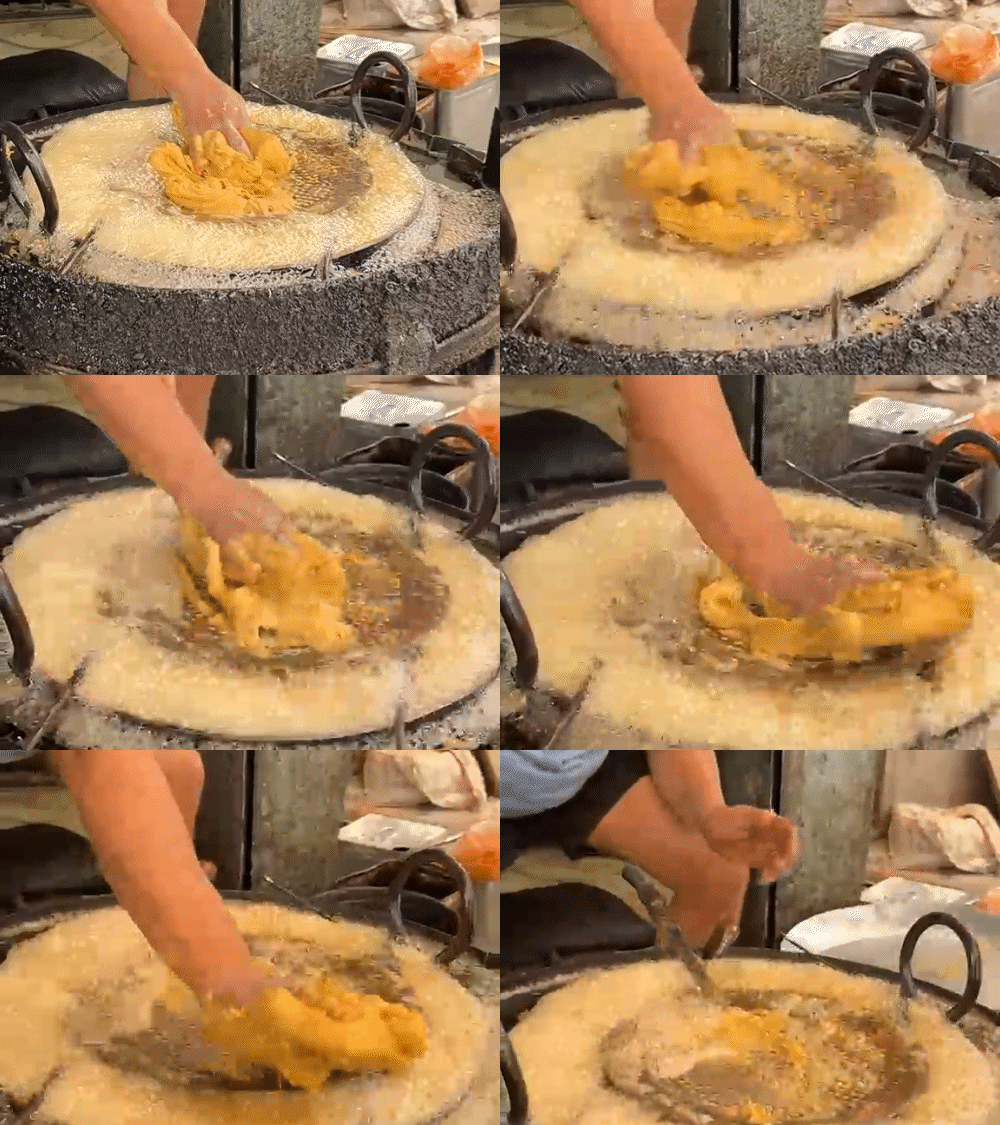
The temperature near the furnace remains up to 55°C. Despite this, artisans remain engaged in making bhujia.
Artisans toiling at a 55°C furnace
Rishi Purohit, who makes bhujia in Acharyaon ka Chowk, explains: “Even though the temperature outside may be 46°C, the temperature near our furnace exceeds 50°C.”
Standing there in this heat is like punishment. We cannot shut down the furnace. From my shop alone, 100 kg of bhujia is sold daily. There are more than 100 such shops in Bikaner.
The people here must have bhujia in their morning and evening meals. To fulfill their demand, we have to endure this fire.
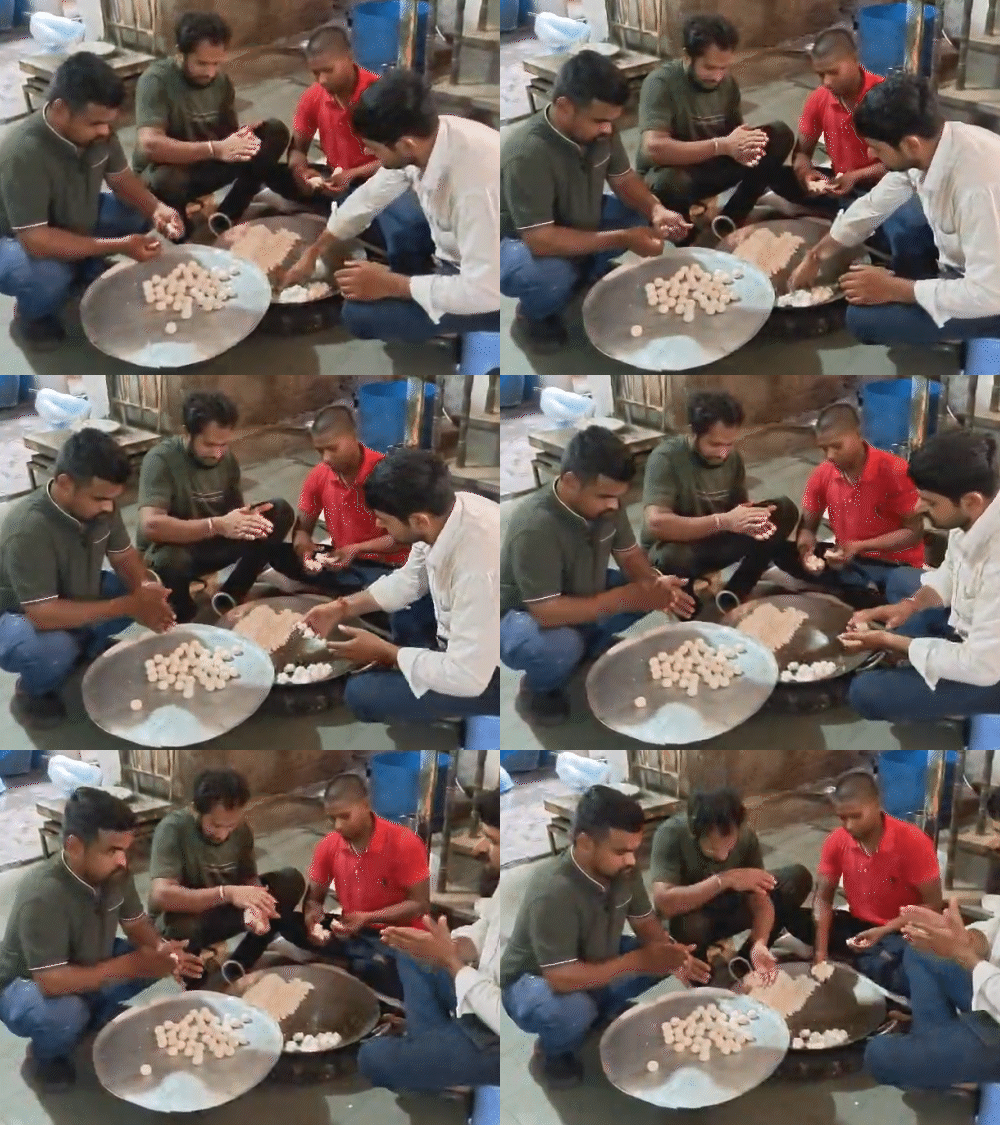
There has been a 70 percent decline in rasgulla production. Along with this, demand has also decreased.
Chhena starts spoiling as soon as it crosses 40°C
Bikaner’s second biggest identity, meaning the rasgulla market, is lying dormant these days. Mohit Singotia, operator of Kishan Sweets, said that there has been a massive 70% drop in demand for rasgullas during summer. There are two main reasons for this.
These days weddings and jimman (feasts) are closed. Sweets made from chhena (cottage cheese) usually don’t spoil quickly, but this rule works only up to 40°C. Since the mercury in Bikaner is 45-46°C, there is a fear of rasgullas getting spoiled.

Rasgullas remain safe only for 4 days
Special cold storage (deep freeze) is being used to keep rasgullas safe. Small boxes are placed inside a large box, and the large box is filled to the brim with ice-cold water. With this arrangement, rasgullas can stay safe for only 4 days, after which they start to spoil.

Rasgullas are kept safe in the deep freezer for 4 days. After this, they start to spoil.

The picture is of Junagarh Fort. Usually, crowds of buses are seen here. Now there is silence here. There is no one to listen to the folk artists here.
Silence prevails at Junagarh Fort
Generally, domestic and foreign tourists (especially from France and Russia) visiting Jodhpur and Jaisalmer would definitely stop at Bikaner. But this time, the record-breaking heat has broken the back of the tourism industry.
The area in front of the historic Junagarh Fort, which was once bustling with buses and tourist vehicles, is now deserted. The parking is completely empty, and there is no one to listen to the folk artists waiting for tourists.

Sheds have been prepared at the National Camel Research Centre in Bikaner to protect camels from the heat.
Camel Milk Ice Cream
This deadly heat has also distressed the ‘camel’, the ship of the desert. Special sheds and canopies have been built at the National Camel Research Centre (NRCC) located in Bikaner to protect camels from heat stroke.
These camels, once used for transportation, are now having their milk used to prepare medicines for diabetes patients. These days, ice cream parlors in the city are especially selling ‘camel milk ice cream’, which people are eating to try to get relief from the heat.
10-foot-tall Ashoka trees burned
Due to the canal closure, the water crisis in the city has deepened. The people of Bikaner have a great fondness for keeping gardens and kitchen gardens in their homes, but this Nautapa has burned 50 percent of the plants.
The situation is such that even 10-foot-tall Ashoka trees have been scorched. To keep gardens alive, people are forced to order 1-2 water tankers daily by paying ₹1,000.
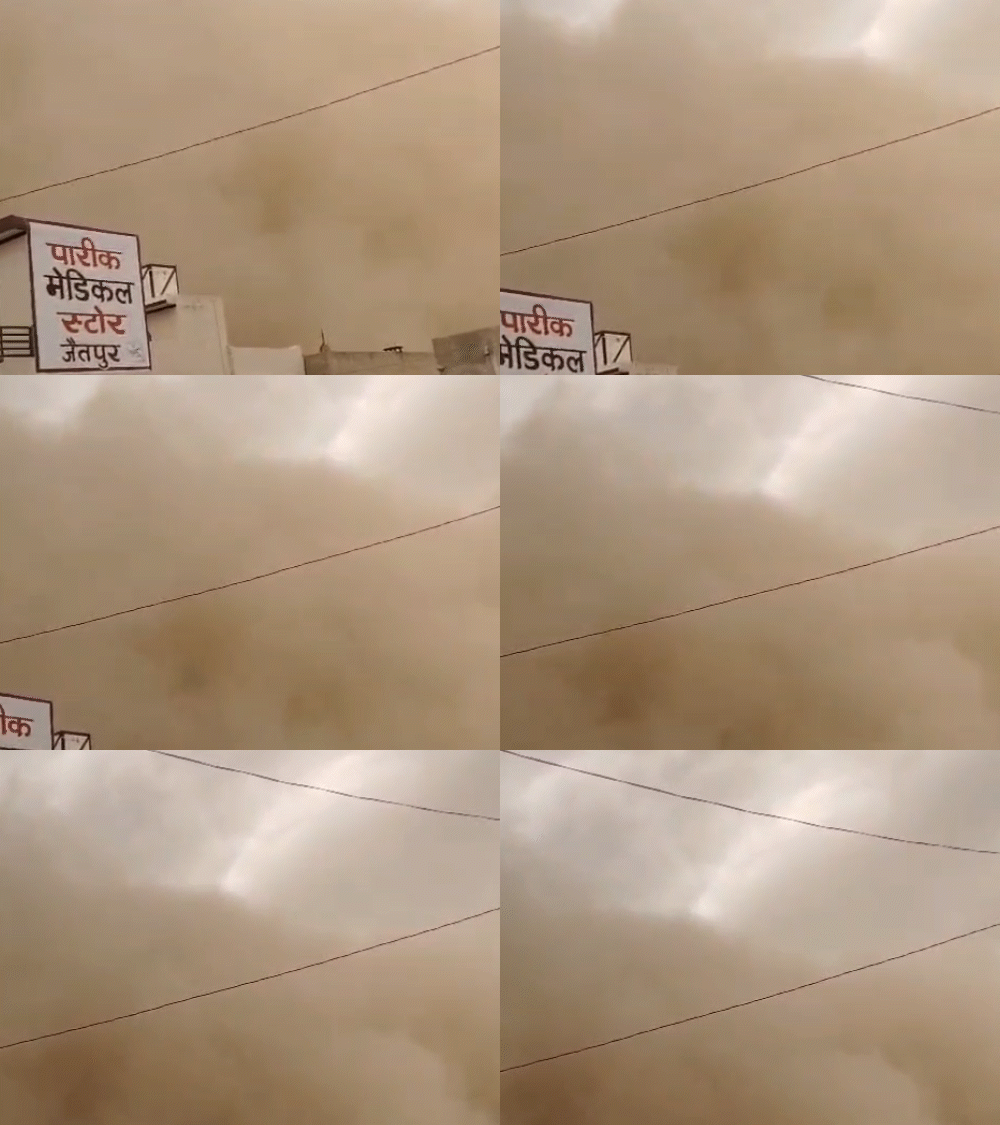
On May 29, the weather in Bikaner suddenly changed, and darkness fell during the day.
Night temperature dropped to 26°C after dust storm
On May 29, a severe dust storm (sand haze) that arose in western Rajasthan engulfed Bikaner along with Sri Ganganagar and Jaisalmer. When this storm reached the city via Mahajan and Arjansar, darkness fell even during the day.
After this storm and rain, the temperature, which was above 46°C, tumbled down below 40°C. The night temperature in Bikaner used to reach 33°C. After the storm and rain, the temperature has come down to 26°C.