

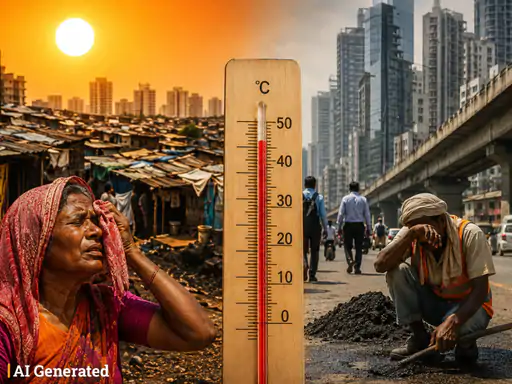
India’s worsening heatwaves are exposing deeper problems in how cities are built, planned and governed.
From shrinking green cover and concrete-heavy neighbourhoods to unequal access to cooling and unsafe working conditions, extreme heat is increasingly becoming an urban inequality crisis rather than just a weather event.
In today’s Explained, we take a look at why India’s heatwave is now being seen as an urban planning failure.
Why are Indian cities becoming dangerously hotter every year?
Indian cities are getting hotter due to a mix of climate change, recurring El Niño conditions and rapid urbanisation. Heatwaves are becoming more frequent and severe, with temperatures crossing 44°C in several cities this summer.
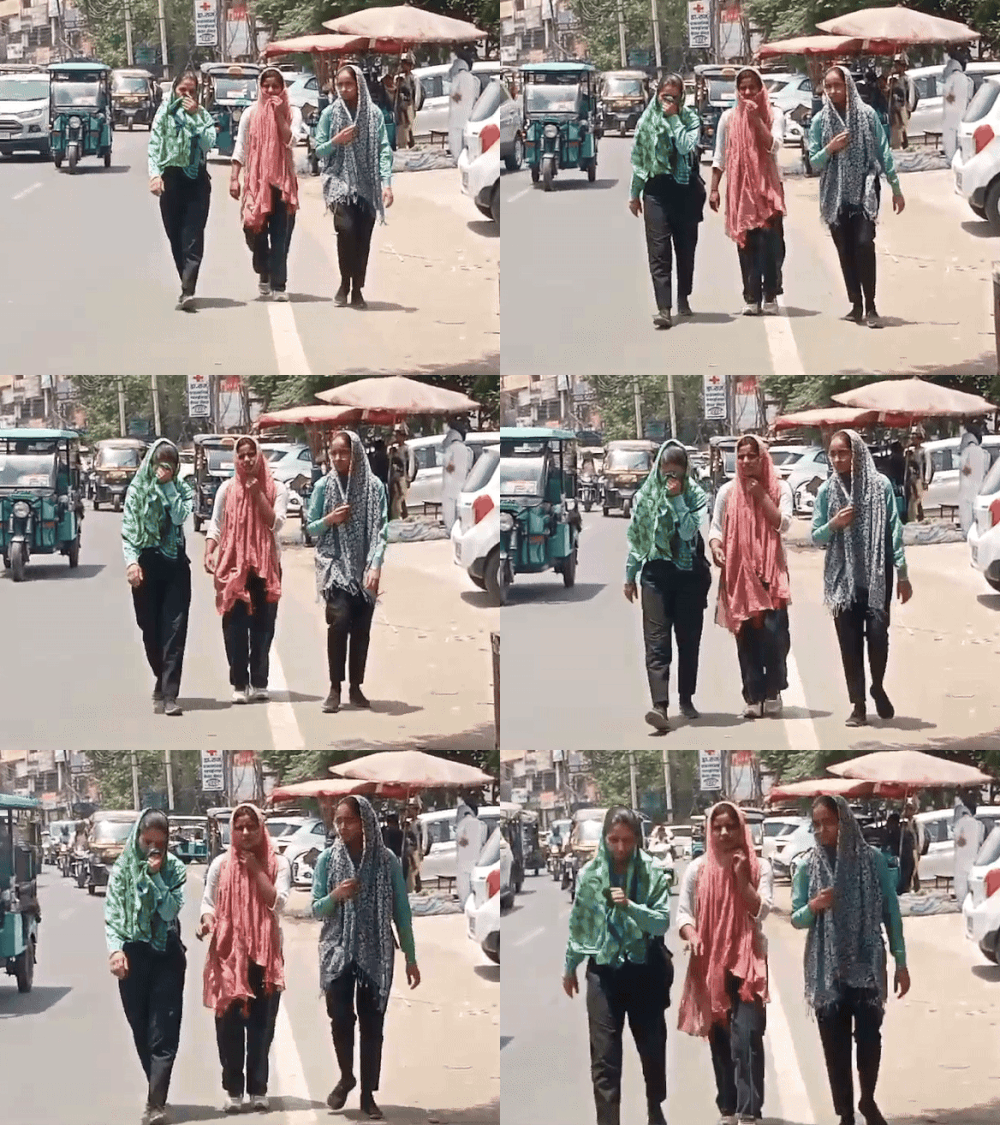
During the April 2026 heatwave, India accounted for 95 of the world’s 100 hottest cities.
According to the Observer Research Foundation (ORF), a New Delhi-based think tank, nearly 60% of the rise in urban heating is linked to expanding concrete surfaces, asphalt roads, metal roofs and dense construction.
The report further argues that shrinking green cover and disappearing tree canopies are intensifying the urban heat island effect across Indian cities.
What is a heatwave?
According to the India Meteorological Department (IMD), a heatwave is a period of unusually high temperatures compared to what is normally expected in a region.
Because different places in India have different climates, the temperature at which a heatwave is declared also differs from place to place based on that region’s historical temperatures.
In simple terms, a heatwave is when an area experiences extreme heat for several days continuously.
What is considered “extreme” depends on what temperatures are normal for that area. For example, a temperature that may feel routine in Rajasthan could be treated as a heatwave in a cooler hill region.
The impact of a heatwave becomes more severe when other weather conditions also worsen the heat. High humidity can make the body feel hotter because sweat does not evaporate easily. Strong hot winds, very high daytime temperatures, and heatwaves lasting for many days can further increase health risks and discomfort.
Why do poor neighbourhoods feel hotter than rich areas?
Poor neighbourhoods often experience harsher heat because they have fewer trees, cramped housing and heat-trapping materials such as tin and asbestos roofs. Informal settlements also tend to lack ventilation, shaded spaces and reliable cooling infrastructure.
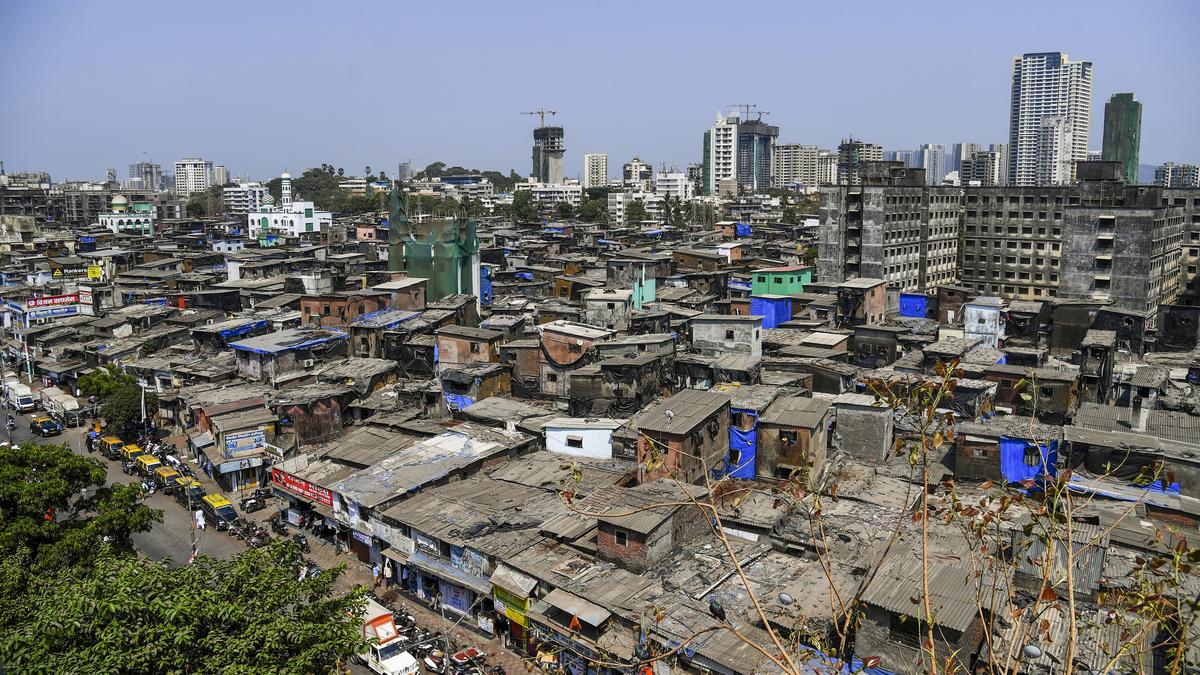
Mumbai’s Dharavi is considered one of the poorest and most densely populated areas in the world. (Photo:PTI)
According to the think tank, areas with low green cover and dense informal housing face significantly higher thermal stress than wealthier neighbourhoods.
The report cites Mumbai as an example, where Dharavi recorded a mean land surface temperature of 35.9°C, compared to 30.3°C in Matunga, despite being located barely two kilometres apart.
What is the ‘urban heat island effect’ and why does it matter?
The “urban heat island effect” refers to cities becoming significantly hotter than nearby rural areas because concrete buildings, asphalt roads and dense infrastructure absorb and retain heat. Areas with fewer trees and water bodies also cool down more slowly, especially at night.
According to NASA, satellite readings show urban areas trap more heat due to land modification and intense human activity.
This matters because the impact goes far beyond uncomfortable weather.
- Hotter cities increase the risk of:
- Heatstroke and heat exhaustion.
- Raise electricity demand due to heavy air-conditioner use
- Worsen pollution levels.
- The phenomenon is driven by dense concrete construction.
- Dark surfaces with low heat reflectivity and shrinking vegetation, which reduces natural cooling through evapotranspiration.
The ORF meanwhile argues that rapid urbanisation and declining green cover are intensifying this effect across Indian cities.
Why are informal workers the worst affected during heatwaves?
Informal workers are among the worst affected during heatwaves because their jobs require long hours outdoors, often without access to shade, drinking water or cooling facilities. For daily wage earners, avoiding peak afternoon heat can also mean losing income or even employment.
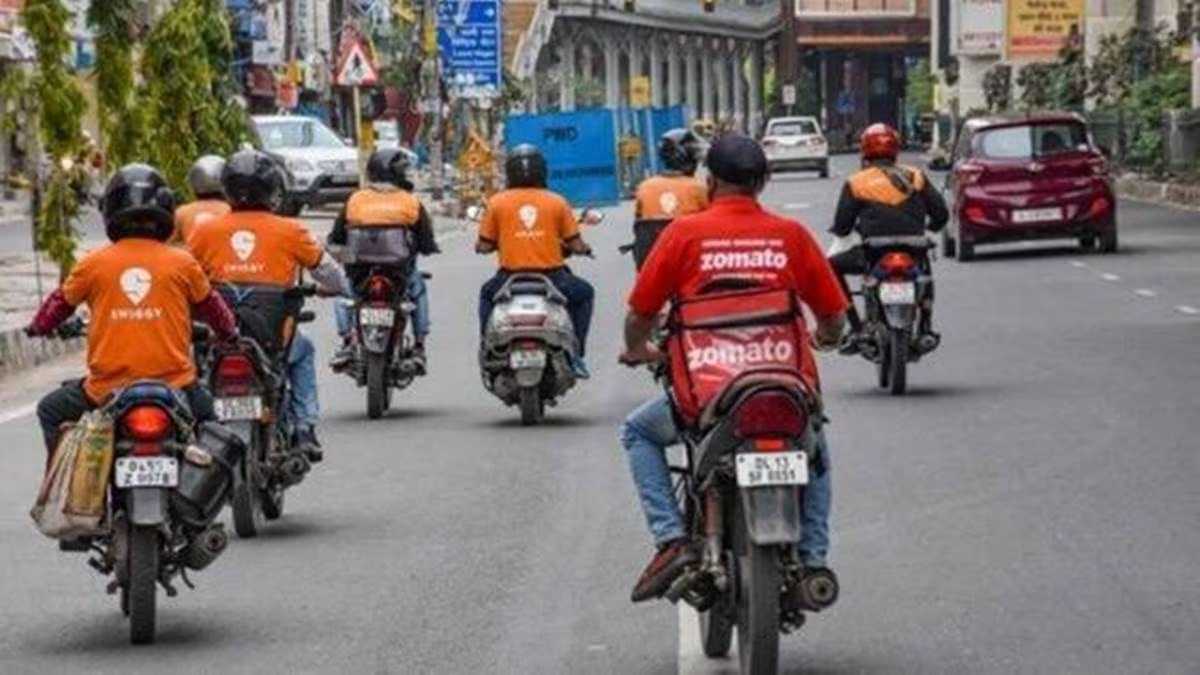
Gig workers battle extreme heat on concrete-heavy city streets as India’s urban heat crisis intensifies. (Photo: PTI)
According to the Observer Research Foundation (ORF), a New Delhi-based think tank, workers such as street vendors, delivery riders, sanitation staff and construction labourers face prolonged exposure to heat from asphalt roads, concrete surfaces and metal structures.
The report notes that India lost nearly 247 billion labour hours due to heat in 2024, causing economic losses estimated at US$194 billion.
The report also argues that standard heat advisories asking people to avoid going outdoors between noon and 3 pm or avoid strenuous afternoon activity are often unrealistic for informal and low-income workers, as following such warnings can directly result in lost wages and livelihood risks.
How does access to cooling reflect inequality in cities?
Access to cooling in Indian cities is increasingly shaped by income and housing conditions, creating what experts describe as “thermal inequality”. While wealthier households can rely on air conditioners, insulated homes and private green spaces, low-income communities often remain exposed to extreme heat with limited relief.
Cooling technologies create a “dual inequality”, many poor households cannot afford air conditioners or rising electricity costs, while heat released from AC condensers further raises outdoor temperatures in densely populated neighbourhoods.
The report notes that some low-income households spend up to 8% of their income on cooling, pushing them deeper into energy poverty.
Why are parks, lakes and trees now being seen as ‘climate infrastructure’?
Parks, lakes and trees are increasingly being viewed as “climate infrastructure” because they help cities naturally cool down during extreme heat. Trees provide shade, water bodies reduce surrounding temperatures and green spaces limit the heat trapped by concrete-heavy urban areas.
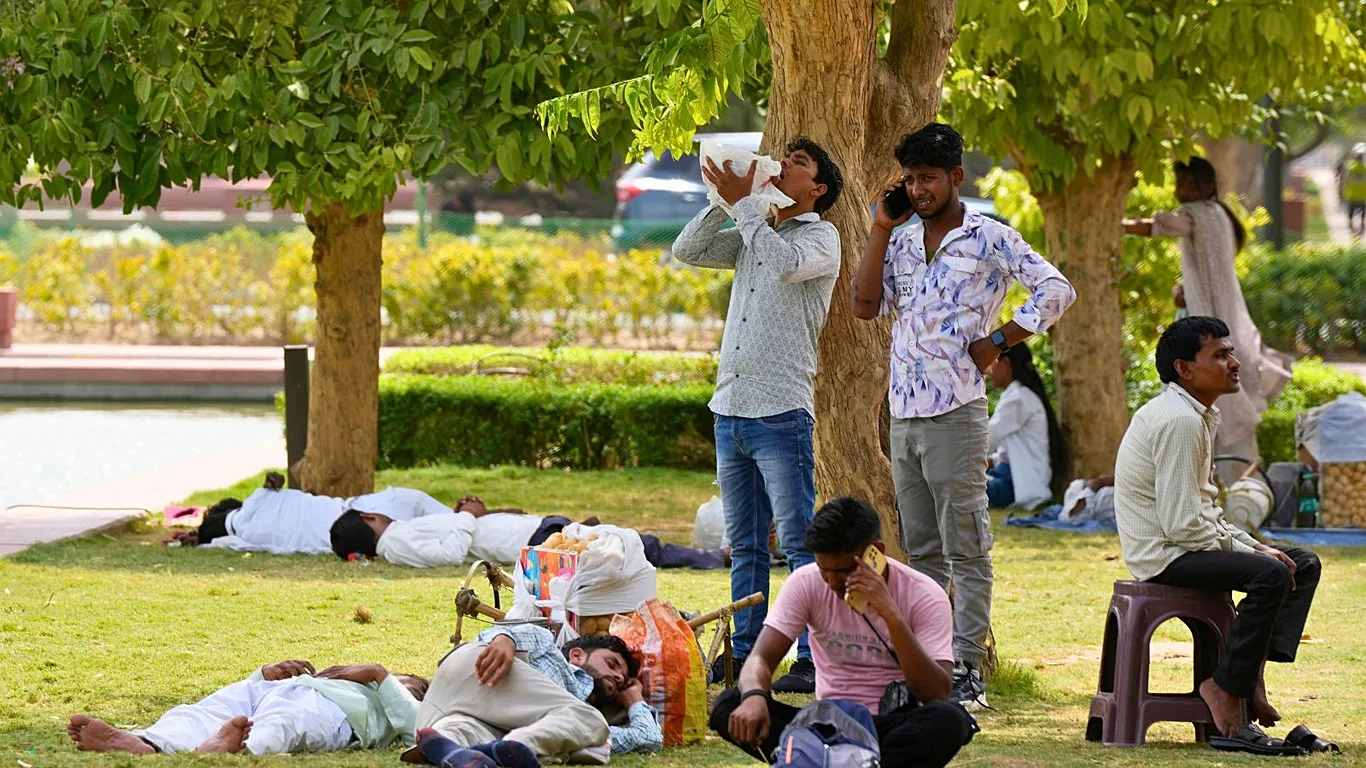
Parks, lakes and trees are no longer just urban amenities, they are becoming vital climate infrastructure in cities battling extreme heat. (Photo: AP)
Shrinking green cover and disappearing urban commons are worsening heat stress across Indian cities.
The report points to cities such as Medellín in Colombia and Singapore, where urban forests, green corridors and ecological infrastructure have been integrated into city planning to reduce heat, improve air quality and manage flooding simultaneously.
The comparison is significant because Colombia, the Indian peninsula and Singapore all lie in the tropical zone around the Equator, a region characterised by consistently high temperatures, humidity and dense biodiversity.
Therefore, climate-sensitive planning in these regions is becoming critical as tropical cities face longer and more intense heatwaves.
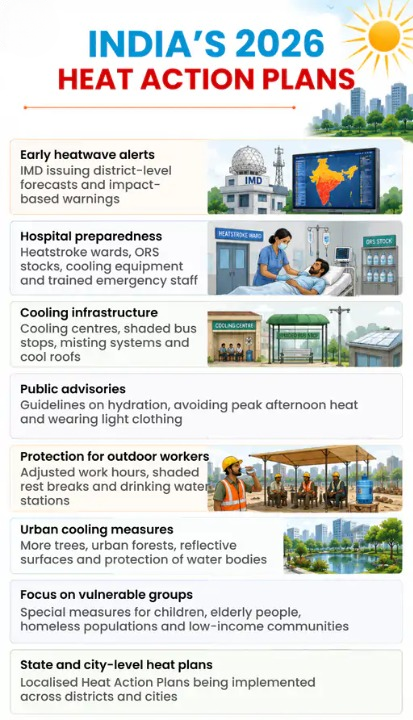
What are heat action plan across parts of India?
As heatwaves intensify, Indian states are moving beyond emergency responses and adopting long-term Heat Action Plans (HAPs), cooling policies, and disaster funding systems. According to the Union government, over 250 cities and districts across 23 heat-prone states now have operational HAPs.
According to the Natural Resources Defense Council (NRDC) report Extreme Heat in India 2026, several states are introducing innovative heat resilience measures.
Tamil Nadu
Tamil Nadu has declared heatwaves a state-specific disaster, allowing SDRF funds for relief and preparedness. The state has launched state- and city-level HAPs and Urban Cooling Guidelines promoting cool roofs, passive cooling, urban greening, and climate-responsive planning. Its Urban Greening Policy mandates 15 per cent green cover in cities, while the “Green Schools” initiative reduced classroom temperatures by 3-4°C, from 31°C to 27°C. The state has also partnered with the UK government to establish a Heat Resilience Centre.
Maharashtra
Maharashtra’s HAP combines early warning systems, public health preparedness, infrastructure adaptation, and water-energy security. Vulnerability mapping identified Vidarbha, Marathwada, and Khandesh as high-risk regions. Amravati Municipal Corporation has introduced mandatory cool roof bylaws for large buildings. The state is also setting up a Centre of Excellence for Heat Resilience and Sustainable Cooling.
Uttar Pradesh
Uttar Pradesh has expanded HAP coverage across most districts and introduced district-specific heatwave thresholds for better alerts and response. Its Urban Green Policy promotes Miyawaki forests, sponge parks, green roofs, and vertical gardens to reduce urban heat island effects.
Telangana
Telangana’s Cool Roof Policy (2023-2028) promotes affordable cooling measures, especially in low-income and high-density areas. The state has declared heatwaves a state-specific disaster, enabling SDRF-backed relief measures. Heat mitigation is also linked with Haritha Haram afforestation and Mission Kakatiya water restoration programmes.
Delhi
Delhi’s HAP, implemented under the DDMA, uses graded heat alerts that trigger department-wise action during extreme heat events. The plan includes measures for outdoor workers and informal settlements while promoting cool roofs, passive cooling, and urban greening. Pilot cool roof projects have been launched at Kashmere Gate and Anand Vihar ISBTs.
Rajasthan
Rajasthan has declared heatwaves a state-specific disaster and expanded district-level HAPs. Measures include shaded worksites, drinking water points, rescheduled outdoor work, and awareness campaigns for vulnerable groups. Jodhpur introduced a net-zero cooling station in 2024 capable of reducing temperatures by 8-12°C through passive cooling and renewable energy.
Kerala
Kerala has recognised heatwaves as a state-specific disaster and launched a state HAP integrating heat-health protocols into governance. The state introduced one of India’s first village-level HAPs in Kozhikode’s Moodadi Grama Panchayat. Funds have been allocated for cooling centres and water kiosks, while all local bodies have been directed to prepare decentralised HAPs under the State Action Plan on Climate Change (2023–2030).