
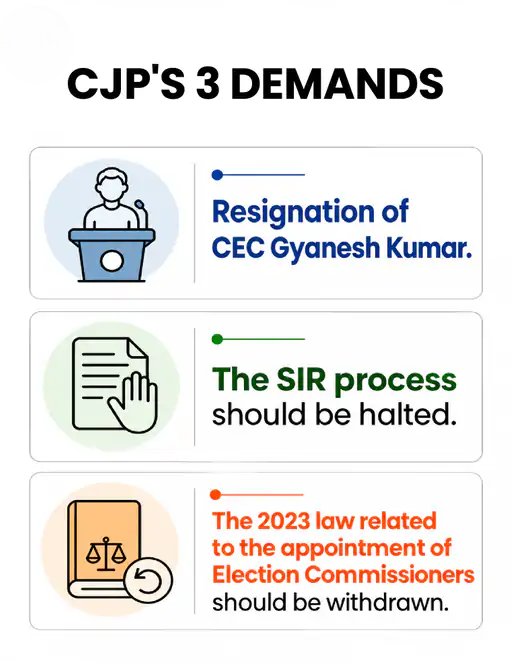
The Cockroach Janata Party (CJP) on Thursday gave Chief Election Commissioner Gyanesh Kumar 48 hours to resign, warning of nationwide protests followed by a demonstration in Delhi if he did not step down.

CJP founder Abhijeet Dipke cited reports of differences among Election Commission officials over the Special Intensive Revision (SIR) and accused Kumar of being “the biggest traitor” and “the biggest anti-national” in the country.
Dipke also alleged that more than 13 crore votes had been deleted through the SIR exercise, claiming that people were being deprived of their right to vote.
Four key points from the press conference
1. Questions BJP over 2024 election results
Dipke said the BJP failed to secure a majority in the 2024 elections. After the “400 paar” slogan, the party was reduced to 240 seats. He said this made him feel that the country’s mood was changing and regional forces were becoming stronger.
2. Alleged pattern of defeating regional leaders
Dipke alleged that leaders such as Uddhav Thackeray, NCP leaders, MK Stalin, Pinarayi Vijayan, Arvind Kejriwal and Mamata Banerjee were defeated one after another. He said this could not be a coincidence and that there appeared to be a pattern. He pointed out that they had come together and campaigned in 2024, asking how they were later defeated one by one.
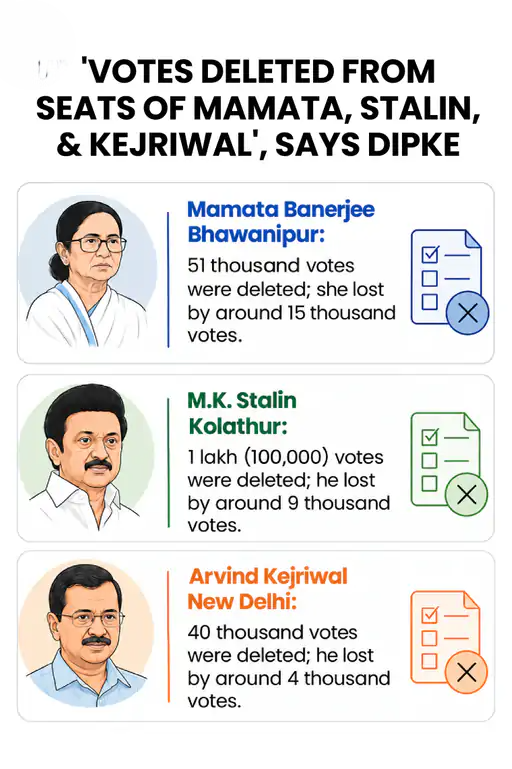
3. Claims votes were deleted from seats of Mamata, Stalin and Kejriwal
Dipke claimed that 50,000 votes were deleted from Mamata Banerjee’s seat in West Bengal, where she lost by around 15,000 votes. He claimed 1 lakh votes were deleted from MK Stalin’s seat, where he lost by around 45,000 votes. In Delhi, he claimed 40,000 votes were deleted from Arvind Kejriwal’s seat, where he lost by around 4,000–5,000 votes.
4. Questioned whether Opposition was being targeted
The CJP founder questioned whether these steps were aimed at eliminating strong Opposition leaders. He said the party had no special attachment to the Opposition or any particular party, but asked whether democracy could be called democratic if the entire Opposition was eliminated. He also questioned whether such elections could be considered free and fair.
Report: Election commissioners also sent objections to Gyanesh Kumar
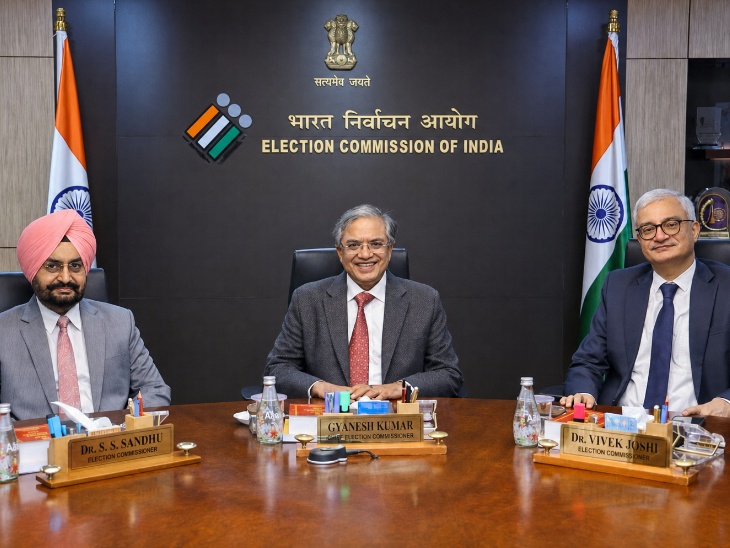
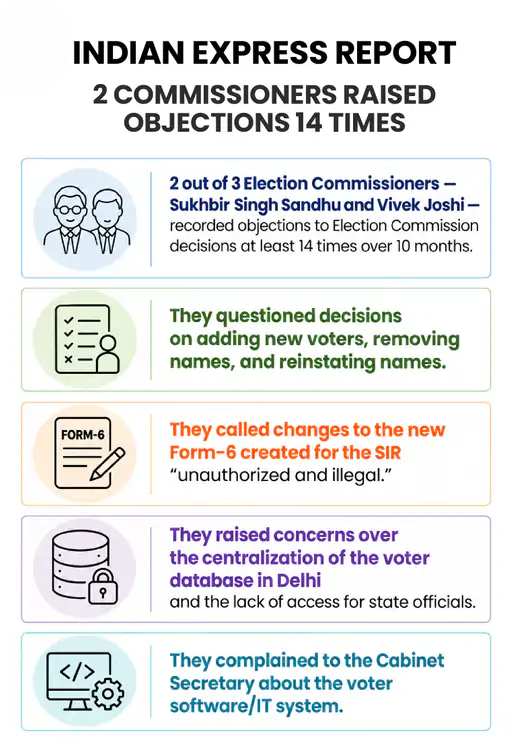
The differences among election commissioners came to light after a report by The Indian Express, published on 23 September. It said Election Commissioners Sukhbir Singh Sandhu and Vivek Joshi claimed that several decisions were taken without their knowledge or approval.
They raised written objections to 14 Commission decisions between 28 October 2025 and 14 August 2026. Four objections were filed on 16 April. Copies were also sent to Chief Election Commissioner Gyanesh Kumar and, in some cases, to deputy election commissioners overseeing the relevant work.
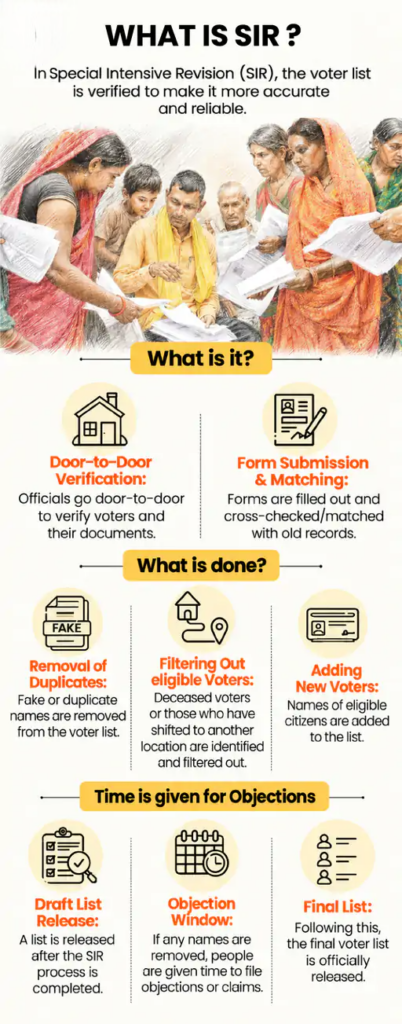
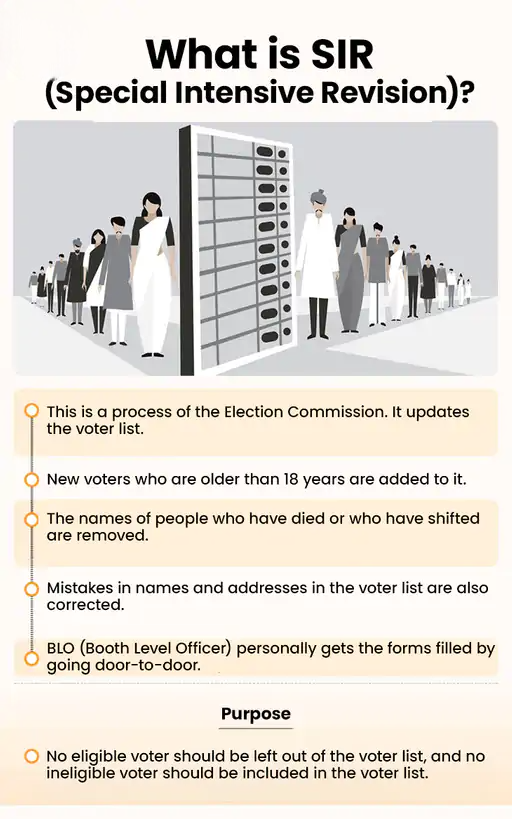
The dispute has emerged amid the Special Intensive Revision (SIR), which began in Bihar in June 2025. Under the SIR, more than 13 crore names have been removed from draft electoral rolls across 30 states and Union Territories.
EC says decisions were unanimous, responds in 8 points
The Election Commission responded to the controversy on the evening of 23 September. In a statement on X, it said differing views, suggestions and comments are normal in a multi-member constitutional body. The EC gave point-by-point responses to The Indian Express report.
1. Report on 14 objections
Claim: Election Commissioners Sukhbir Singh Sandhu and Vivek Joshi formally objected to at least 14 Commission decisions and orders over the past 10 months, including four on the same day.
EC response: The EC said written notes, comments, technical suggestions and internal reviews are part of the normal, ongoing process. They help ensure transparency, legal compliance and a stronger electoral process. It said all its work followed the law and Commission directions.
2. Questions over adding and deleting voter names
Claim: The objections also concerned the process of adding, deleting and restoring names in voter lists, including appeals against voter deletions in West Bengal.
EC response: The EC said voter registration and deletion are handled by statutory officials such as Electoral Registration Officers (EROs) and District Election Officers (DEOs) under the law.
3. Questions over centralisation of voter data
Claim: Sandhu and Joshi questioned the gradual centralisation of access to the voter database in Delhi. Joshi suggested an audit to ensure only authorised officials could alter voter records.
EC response: The EC said digital platforms such as ECINet operate under strict data-security protocols, with IT checks and audits to prevent unauthorised changes or tampering.
4. Steps for new voters called ‘unauthorised and illegal’
Claim: According to the report, the election commissioners described some steps related to new voters as “unauthorised and illegal”.
EC response: The EC said all its actions followed the law and Commission directions. It said operational questions and suggestions at the draft stage are part of the normal administrative process.
5. Objection to changes in Form-6
Claim: Both commissioners objected to changes in Form-6, used for new voter registration. Joshi said it could not be changed without amending the election rules. Sandhu later raised a similar objection.
EC response: The Commission’s press release did not mention Form-6.
6. Case of 97 voters in Goa
Claim: In Goa, 97 voters considered eligible by Electoral Registration Officers were left out of the final voter list due to a software issue. The report cited this as an example of concerns over data-system centralisation.
EC response: The Commission’s press release did not give a separate response on the case of the 97 voters.
SIR completed in 10 states and 3 Union Territories
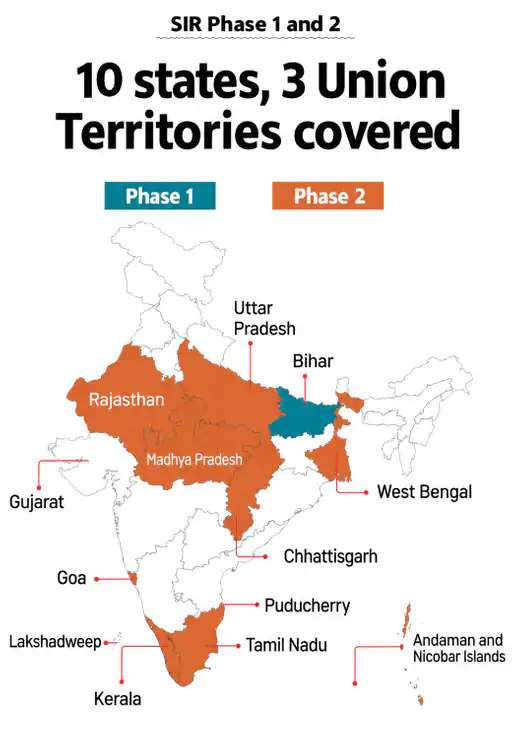
The first and second phases of the Special Intensive Revision (SIR) have covered 10 states and three Union Territories.
After the SIR, the BJP won assembly elections in Bihar, West Bengal, Puducherry and Assam. The Congress-led alliance won in Kerala, while TVK won in Tamil Nadu. Assam underwent a Special Revision (SR), where the BJP also returned to power.
Third phase: SIR in 16 states, including Delhi and Maharashtra
On 14 May, the Election Commission announced the third phase of the Special Intensive Revision (SIR) in 16 states and three Union Territories, including Haryana, Jharkhand, Uttarakhand, Delhi and Maharashtra.
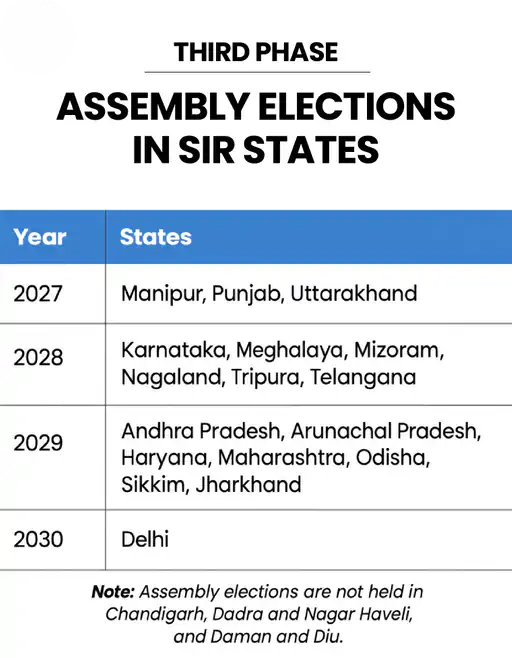
The process will run from 30 May to 23 December, covering the verification of 36.73 crore voters. Punjab, Uttarakhand and Manipur are among the states due to hold assembly elections next year, while the remaining 13 states are scheduled to go to polls in 2028 and 2029.