

The Centre and CJP will hold their third round of talks on 25 July, with Dharmendra Pradhan’s resignation remaining the biggest sticking point.
As CJP and the Opposition continue to press for the minister’s exit, a key question remains: Why hasn’t Pradhan resigned, and have ministers stepped down over controversies in the past? Let’s explore
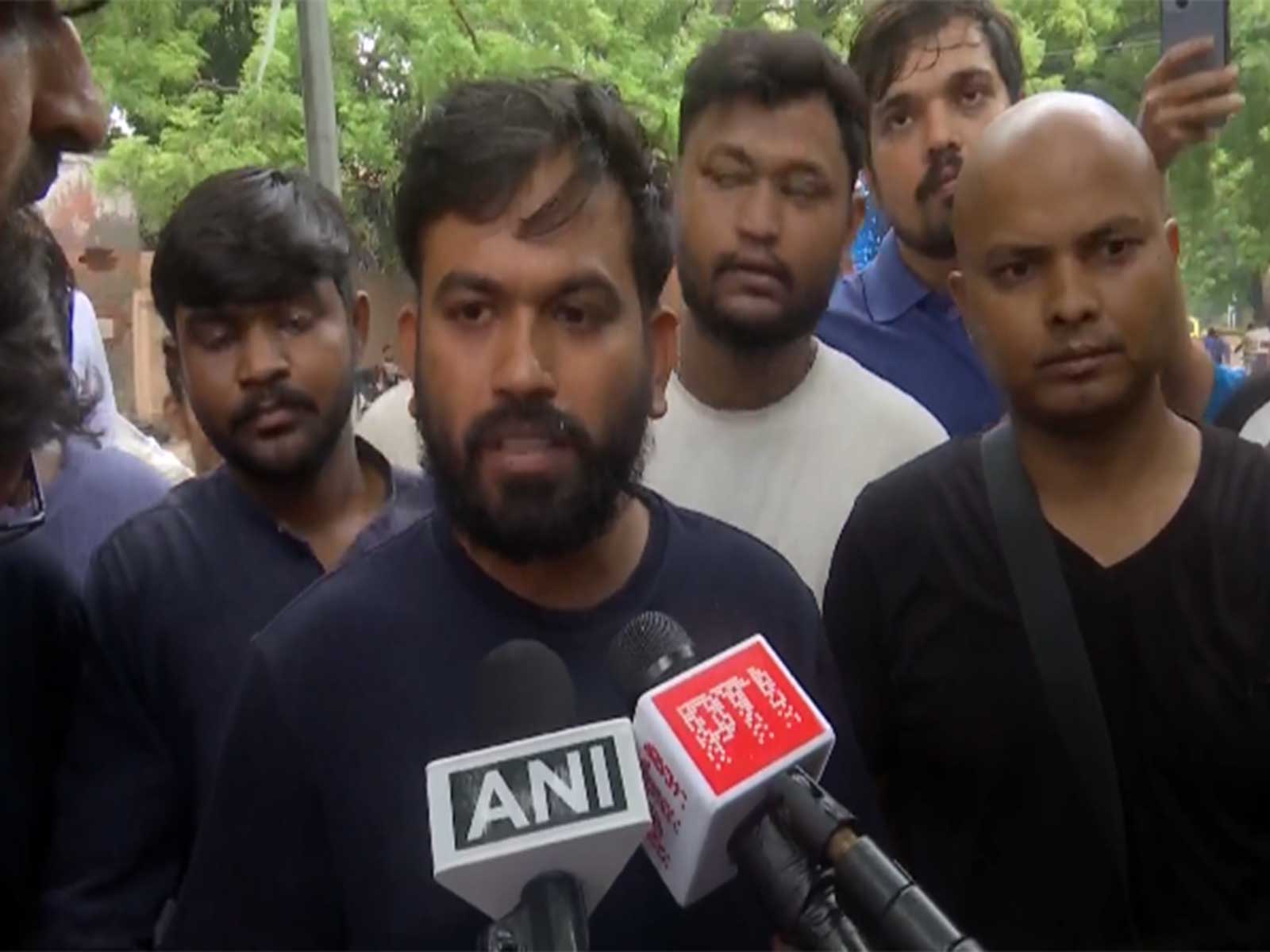
‘Our sit-in protest at Jantar Mantar will continue until Dharmendra Pradhan resigns,’ says Dipke after the second round of Centre-CJP talks on 24 July. / Credits: ANI
What came out of second round of talks between CJP and Centre on 24th July?
- No decision was taken on Dharmendra Pradhan’s resignation.
- The Centre sought time until 25 July; another round of talks is scheduled.
- The government agreed in principle to compensation for affected families and withdrawal of cases against students.
- 47 NTA officials have been removed, and legal action is being considered against some.
- The Centre is planning major NTA reforms, including a leak-proof exam system.
- CJP said Pradhan’s resignation remains its key demand.
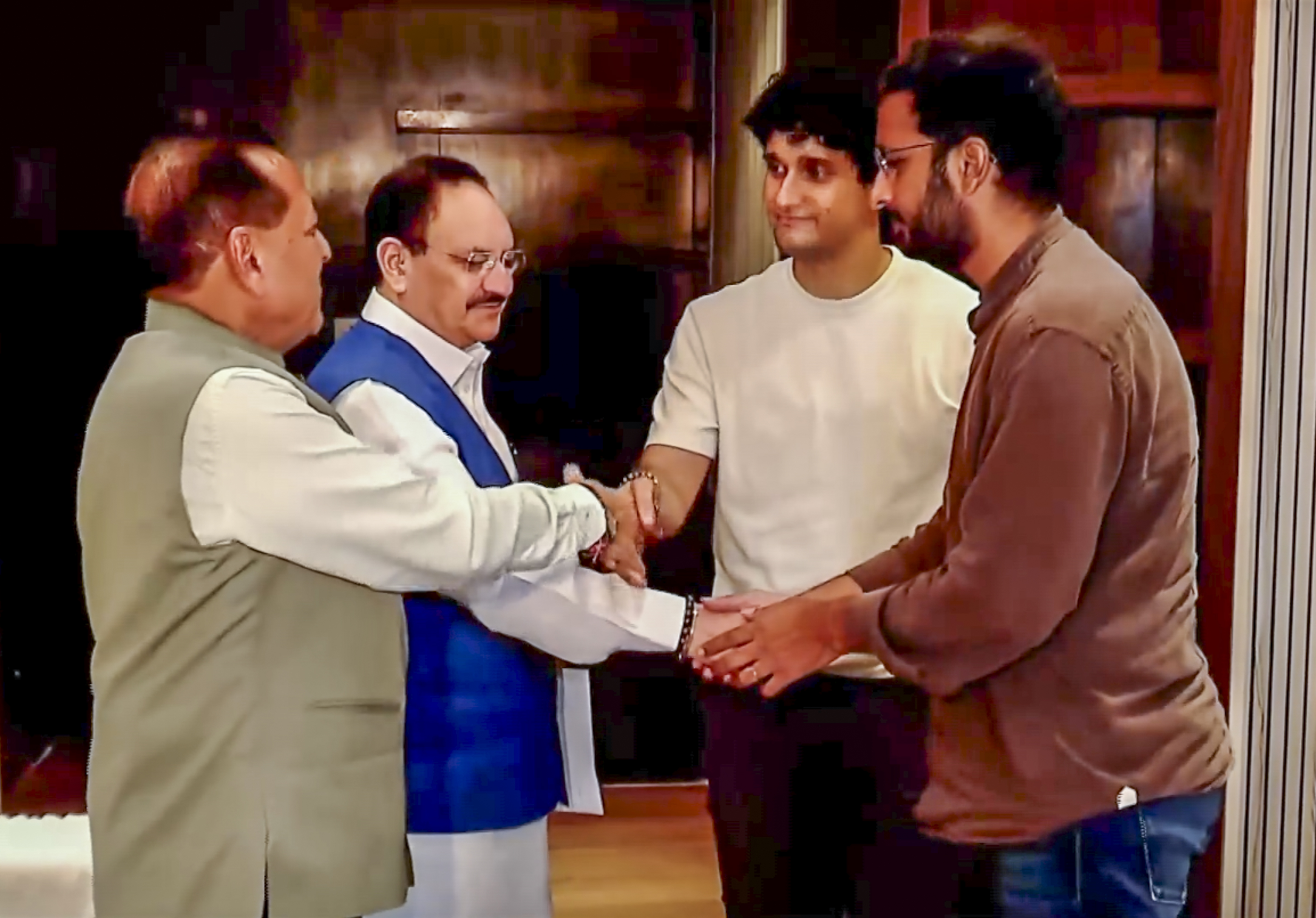
CJP sets 24-hour deadline for government on Pradhan resignation demand
Why isn’t Education Minister Dharmendra Pradhan resigning?
Despite weeks of protests and Opposition demands, there is little sign that Dharmendra Pradhan will step down. Political observers say this reflects a broader BJP approach under Prime Minister Narendra Modi. Over the past decade, the party has generally resisted calls for resignation, arguing that political pressure alone should not determine who remains in office.
Experts say the BJP has largely followed a “no resignations under pressure” policy since 2015, fearing that accepting one resignation could encourage similar demands in future controversies.
Pradhan’s political importance may also matter. He is seen as one of the BJP’s key organisational leaders, with deep roots in the RSS-Sangh ecosystem and a reputation as an effective party strategist.
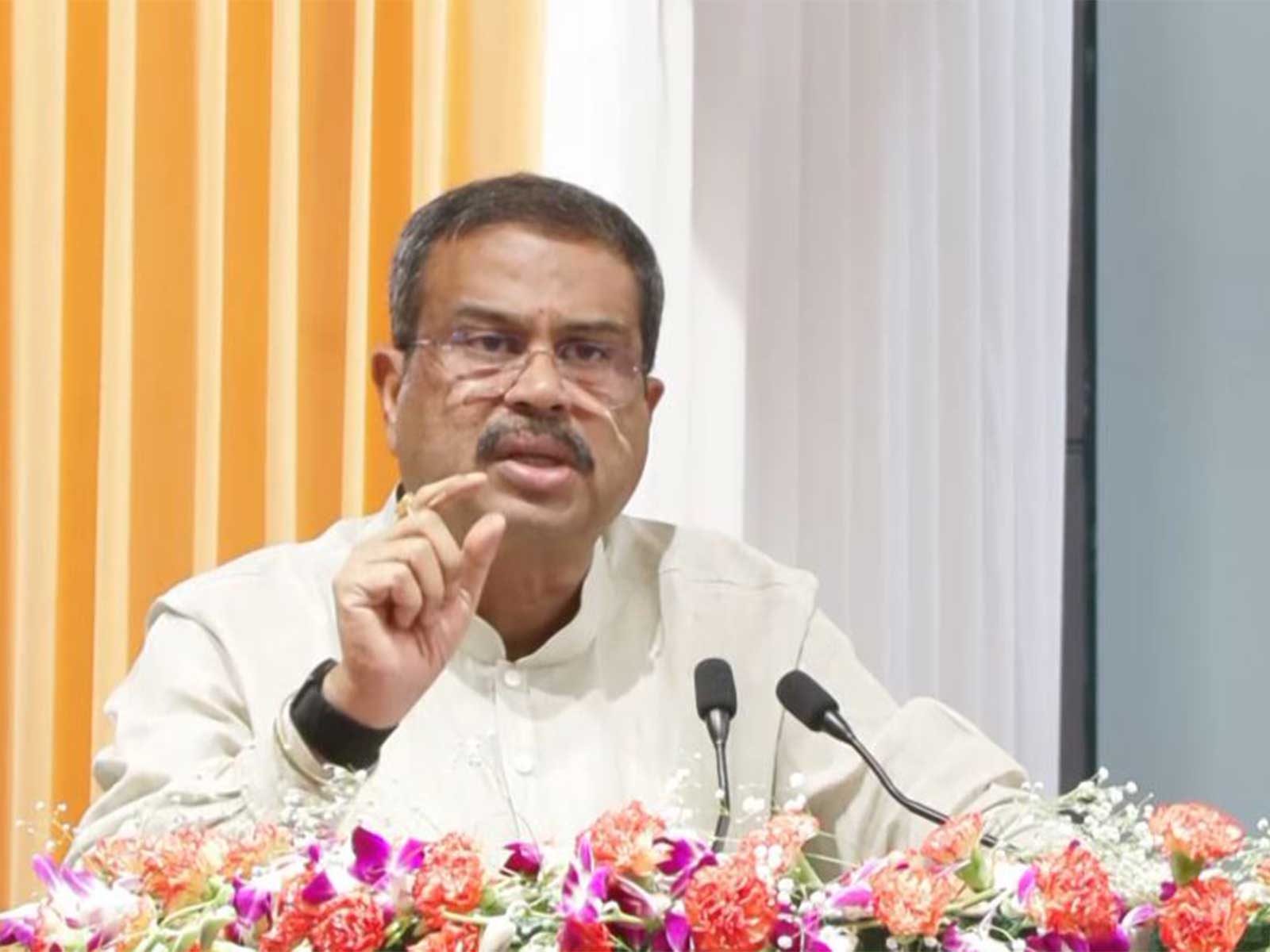
Dharmendra Pradhan accuses Rahul Gandhi and Congress of politicising NEET issue, says government is ready for discussion and reforms.
A pattern of resisting resignation demands
- Mahesh Sharma (2015): Faced calls to resign after describing the Dadri lynching as an “accident”, but stayed in office.
- Smriti Irani and Bandaru Dattatreya (2016): Faced resignation demands after the death of Rohith Vemula, but both remained ministers.
- Ajay Mishra Teni (2021–24): Stayed in the Cabinet for nearly three years despite repeated calls to resign over the Lakhimpur Kheri case.
- Harsh Vardhan (2021): Stepped down after criticism of the government’s handling of the second Covid wave, making him a rare exception.
Does BJP see resignation as a sign of guilt?
One of the biggest political questions after the recent protests is whether asking for a minister’s resignation amounts to an admission of failure by the government.
Over the last decade, PM Narendra Modi has built the image of a strong and decisive leader who keeps a close watch on governance. The Prime Minister’s Office is seen as playing an active role across ministries, while the BJP has projected itself as a party that remains firmly in control.
This raises a larger question. If governance is closely monitored from the top, should accountability for major failures stop at individual ministers, or should it extend further?
Is a minister’s resignation an admission of failure?
Political analyst Amitabh Tiwari says, ‘Resignations are often viewed as an acknowledgement of administrative failure.’
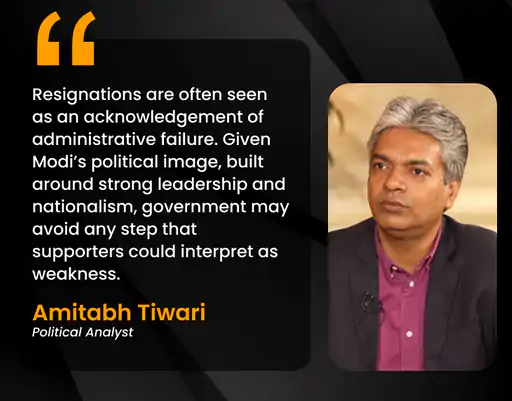
According to him, Modi’s political image is built around strong leadership and nationalism. Any resignation could be interpreted by supporters as a sign that the government has accepted wrongdoing or weakness.
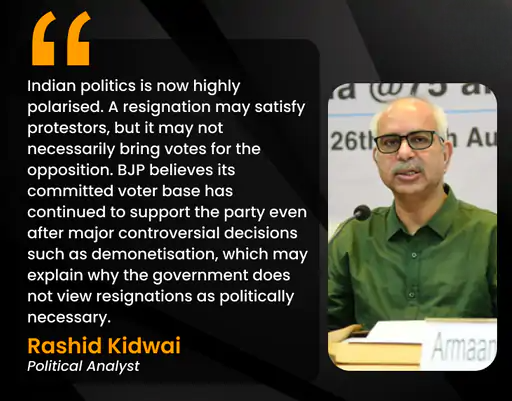
Journalist and political commentator Rasheed Kidwai offers a different perspective.
Why do protesters say youth lack representation?
While the demand for a minister’s resignation has dominated headlines, many protesters argue that the issue goes much deeper than the NEET paper leak. For them, the leak is only one symptom of a wider frustration among young Indians.
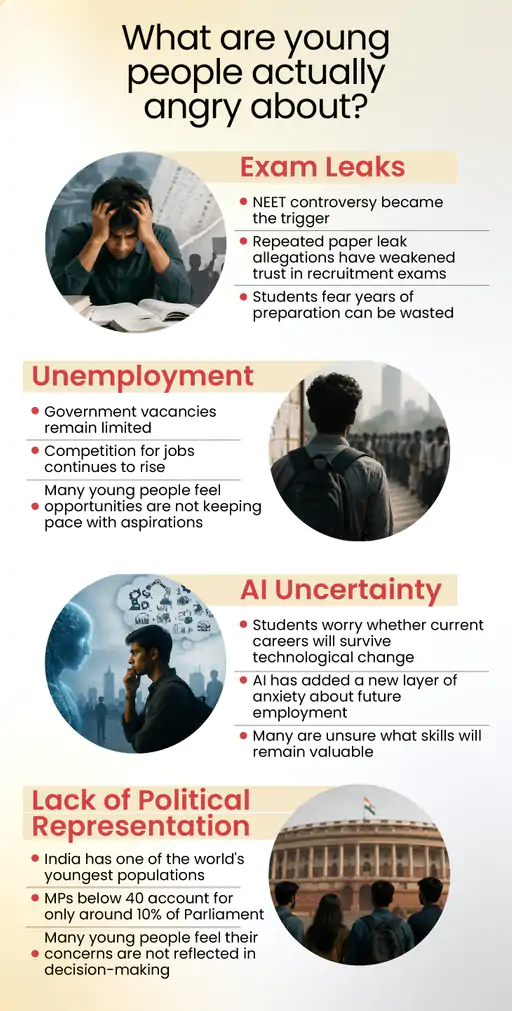
Political analyst Amitabh Tiwari identifies three major reasons behind growing youth dissatisfaction;
Political analyst Amitabh Tiwari identifies three reasons behind growing youth dissatisfaction.
1. Lower representation in politics
Tiwari says many young Indians do not see themselves represented in decision-making. MPs below 40 make up only around 10% of Parliament, despite people under 40 accounting for nearly half the population. He argues this gap makes young people feel their concerns are not a priority.
2. AI-driven uncertainty
Alongside unemployment, AI has created fresh anxiety. Many students worry that the jobs they are preparing for today may not exist in the same form a decade from now.
3. Unemployment and paper leaks
Employment remains the biggest concern. Limited vacancies, intense competition and repeated paper leak allegations have weakened trust in the recruitment system. Many students fear years of hard work can be undone by factors beyond their control. Has BJP itself demanded resignations in the past?
Demands for ministerial resignations are not new in Indian politics.
Almost every opposition party has used the tactic while sitting outside power. When BJP was in opposition, it too demanded resignations over corruption allegations and governance failures. Several ministers stepped down under previous governments after sustained political pressure. The current government, however, has largely followed a different approach.
Amitabh Tiwari offers two explanations.
- The first is that earlier governments were more vulnerable to political pressure and therefore more willing to accept resignations.
- The second is that today’s opposition lacks the strength needed to force such outcomes. The government does not currently feel electorally threatened enough to make concessions.
During the UPA government, then PM Manmohan Singh and Congress president Sonia Gandhi often accepted resignations or removed senior leaders amid Opposition pressure and public outrage.
- Among the high-profile exits from the then Congress-led UPA government, Congress leader and External Affairs Minister Natwar Singh resigned over the Oil-for-Food scandal. Congress leader and Union Home Minister Shivraj Patil stepped down after the 2008 Mumbai terror attacks (26/11) amid criticism of the government’s handling of the crisis.
- In the then Congress-NCP coalition government in Maharashtra, CM Vilasrao Deshmukh resigned following criticism of his administration’s response to the 26/11 attacks.
- Congress leader Ashok Chavan, resigned over the Adarsh Housing Society scam. Congress leader and Union Law Minister Ashwani Kumar, who served in the then Congress-led UPA government, also stepped down after allegations that he had sought to influence a CBI status report in the coal block allocation investigation.
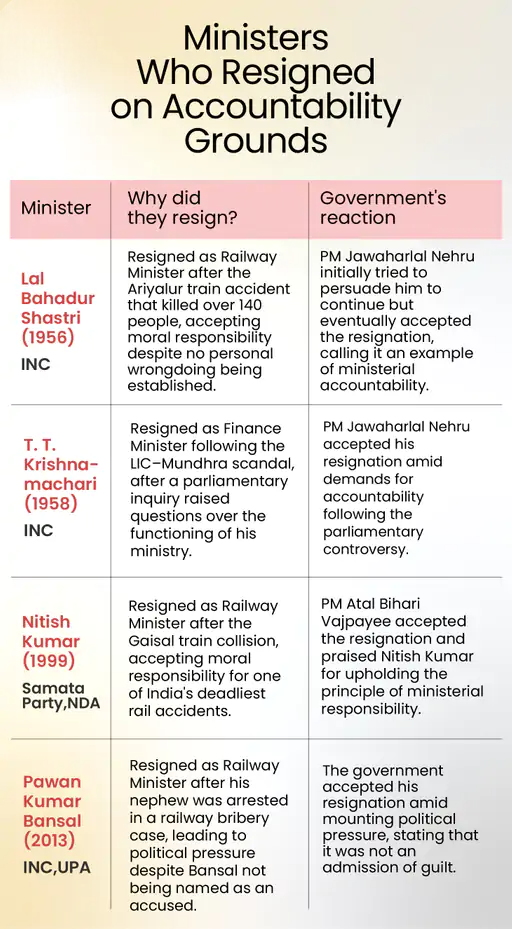
NOTE: The Ministers’ party and alliance affiliations are based on the political landscape at that time and may differ from their current affiliations.
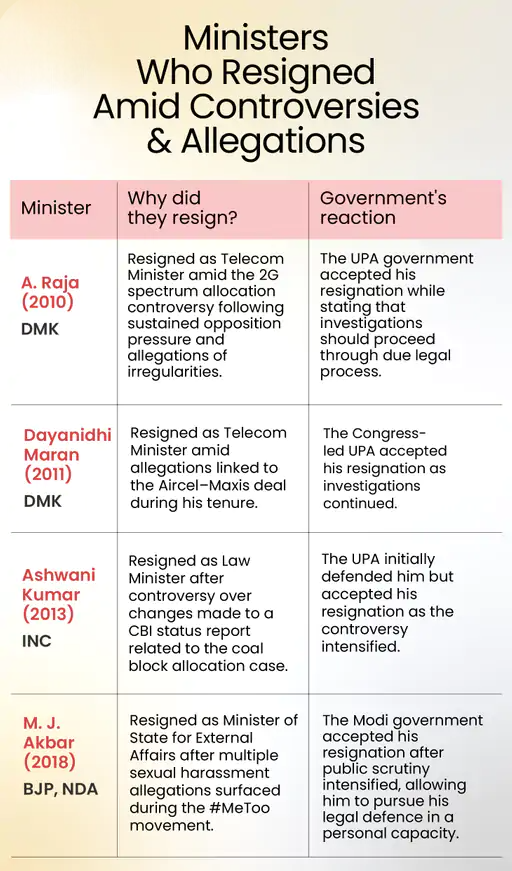
NOTE: The Ministers’ party and alliance affiliations are based on the political landscape at that time and may differ from their current affiliations.
Will youth anger become an electoral challenge?
Rasheed Kidwai believes BJP remains confident about the loyalty of its core voter base. For that reason, the party sees little immediate electoral incentive in accepting ministerial resignations.
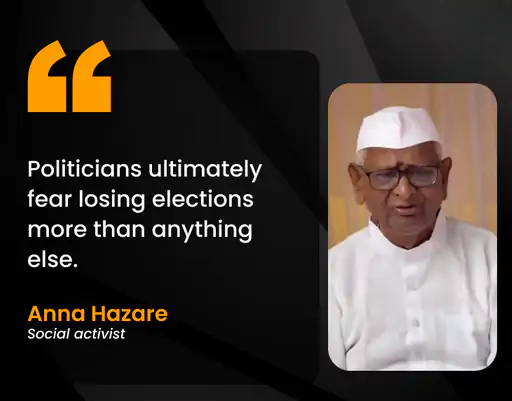
According to him, the government also wants to avoid creating any perception of vulnerability at a time when opposition parties remain divided. Congress, Samajwadi Party, Aam Aadmi Party and several regional parties often pursue separate political strategies and priorities. That fragmentation reduces pressure on the ruling party.
Whether the youth-led protests translate into electoral gains or losses for government remains to be seen. Upcoming elections, particularly in politically significant states such as Uttar Pradesh and Punjab, may offer the first indication of whether youth mobilisation can influence voter- behaviour.