
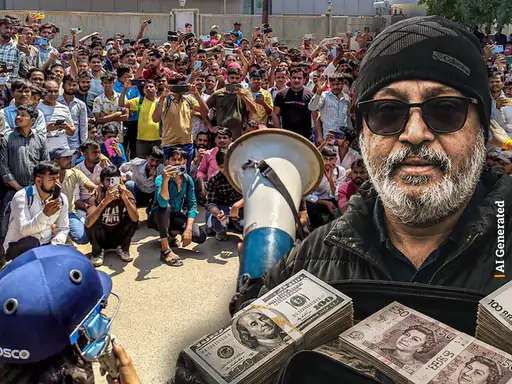
More than 40,000 workers gathered across over 80 locations during the violent Noida labour protests in April, leading to road blockades and hundreds of arrests.
Weeks later, police claimed that one accused named Satyam Verma received over ₹1 crore from foreign countries in dollars, pounds and euros.
Was this merely a labour agitation over wages, or did foreign networks play a bigger role behind the scenes? Let us explore.
Who is Satyam Verma?

65 year old journalist Satyam Verma from Lucknow emerged as one of the central figures in the investigation into the April 2026 labour protests in Noida.
- Police describe him as an active member of the Left-wing workers’ rights group ‘Bigul Mazdoor Dasta’.
- He was arrested from Lucknow on 19 April along with another accused, Himanshu Thakur, during a wider crackdown linked to the unrest.
- Authorities later invoked the National Security Act (NSA) against him and another accused named Akriti.
The case became more controversial after police claimed that over ₹1 crore in foreign currencies had entered Verma’s bank accounts.
Investigators say they are examining multiple transactions and his alleged organisational links. However, Verma’s legal team has strongly denied wrongdoing.
- His lawyer told Hindustan Times that he worked as a freelance translator for companies such as Google and Meta, and that the money reflected legitimate professional payments declared in income tax filings.
On what grounds was he arrested?
Police say Verma was arrested for allegedly playing a ‘pivotal role’ in turning the labour agitation violent.
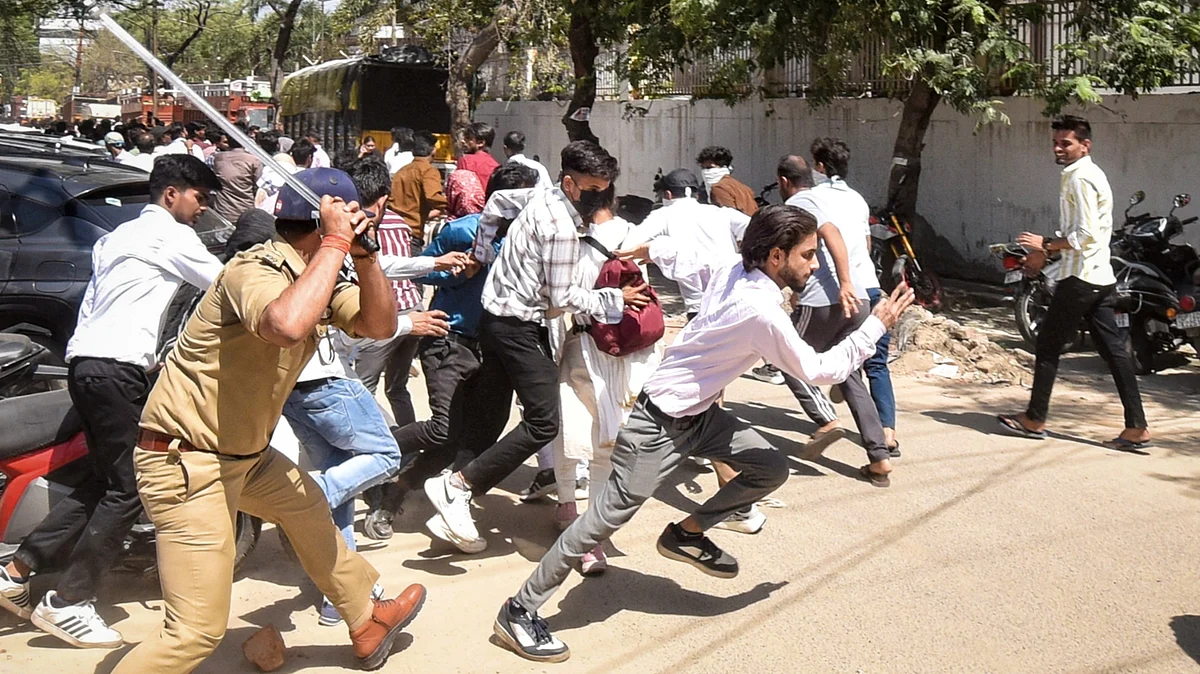
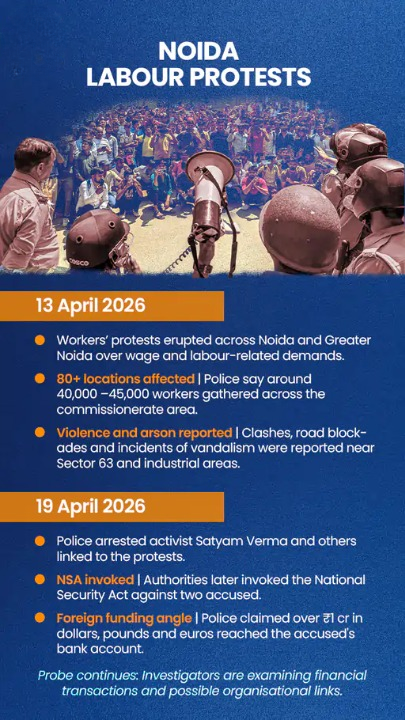
According to investigators, the protests on 13 April quickly escalated into clashes, arson and large-scale disruption across Noida and Greater Noida.
- Protesters blocked roads, disrupted traffic and damaged property at multiple locations, including near Sector 63 and the Motherson industrial area.
- Police estimate that around 40,000-45,000 workers gathered across more than 80 locations under the Gautam Buddh Nagar commissionerate.
- Several FIRs were later filed in connection with vandalism and public disorder.
Initially, the arrests were linked to allegations of instigation and unlawful assembly. But the case became much more serious when the National Security Act was invoked.
- The NSA allows preventive detention in cases where authorities believe public order or national security may be threatened.
- Some activists claim the arrests are excessive and politically motivated.
- Police, meanwhile, maintain that the violence went beyond ordinary labour protests and required stronger legal action.
Which foreign organisations was Verma allegedly linked to, and how did they operate?
So far, police have not publicly named any specific foreign organisation linked to Verma. This is an important point.
- Investigators have only stated that he was associated with ‘several organisations’ that are currently under scrutiny.
- They have also claimed that more than ₹1 crore from foreign countries entered his accounts in dollars, pounds and euros.
- According to the police version, the money was allegedly transferred into multiple personal accounts over time.
- Investigators are now analysing the transaction trail to determine whether the funds were connected to labour mobilisation or organisational activities.
- However, authorities have not yet released documentary proof in public, nor have they identified the countries or institutions involved.
The defence has rejected the allegations. This creates two competing narratives:
- One, portraying organised foreign influence, and,
- The other, presenting ordinary international freelance earnings being treated with suspicion.
That unanswered gap is now at the centre of the investigation.
Why would foreign entities want these labour protests to take place?
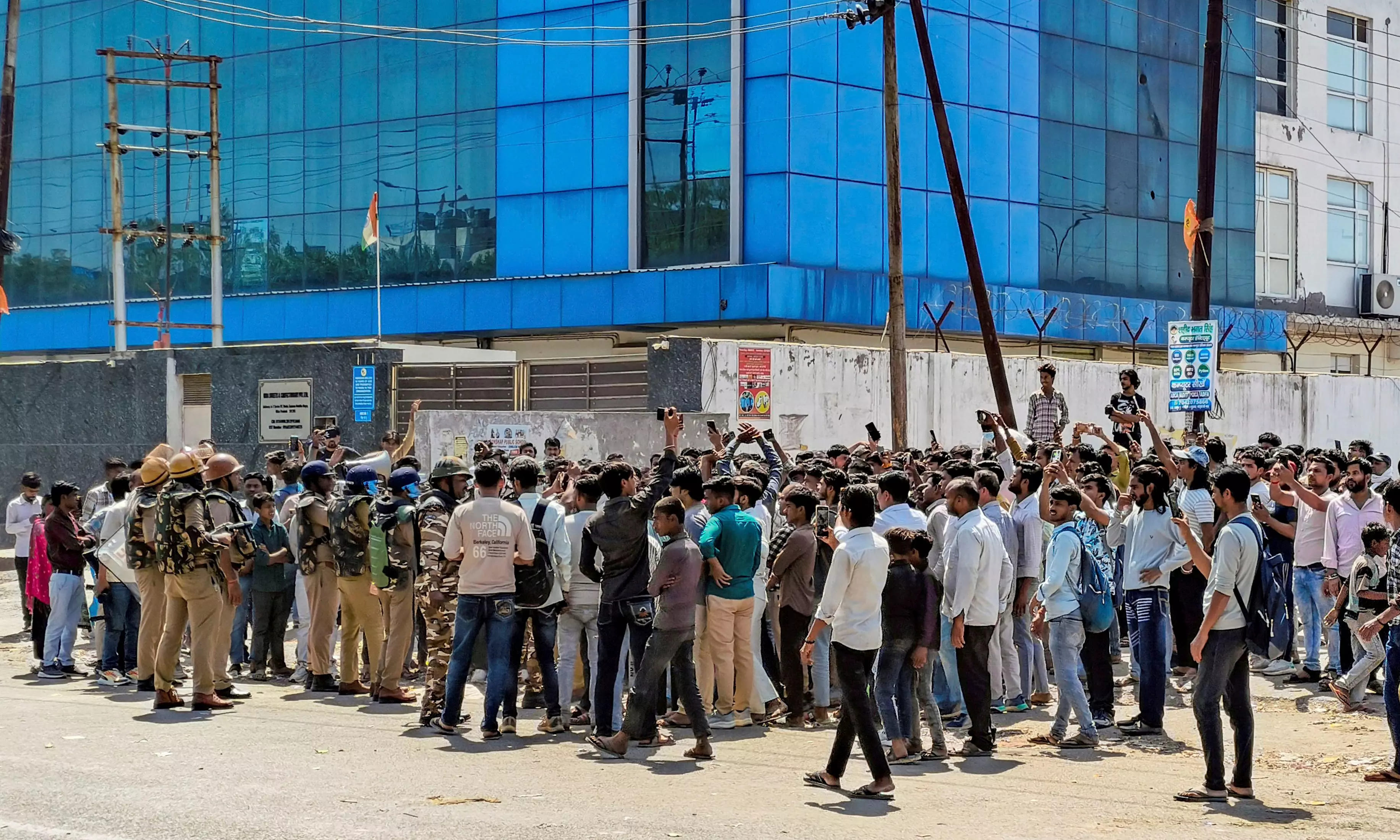
Large industrial protests can disrupt manufacturing, supply chains and investor confidence.
- Noida and Greater Noida are major industrial hubs linked to electronics, automobile parts and export manufacturing.
- Even temporary disruption can affect production schedules and business operations.
- Historically, governments across countries have often viewed labour unrest through both economic and security lenses.
- When foreign funding appears in such cases, agencies typically investigate whether outside groups attempted to shape domestic events for ideological or political reasons.
At the same time, many labour experts argue that worker anger in industrial belts usually emerges from local issues first: wages, contract systems, long working hours or job insecurity.
- Social media discussions after the protests reflected this divide.
- Some people viewed the unrest as genuine worker frustration, while others believed organised networks may have exploited those grievances.
That is why the case remains controversial: the economic grievances were real, but investigators are now asking whether external actors amplified them.
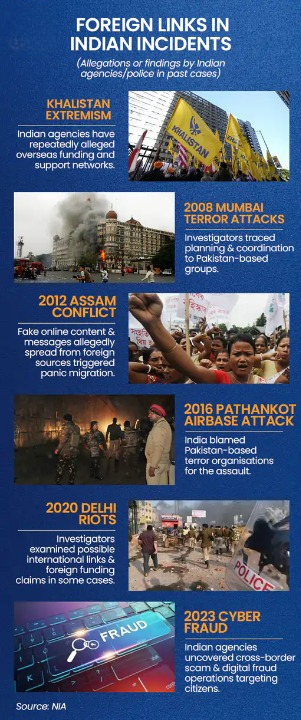
What impact did the Noida labour protests have?
The protests had an immediate impact on public order, transport movement and industrial operations across parts of Noida and Greater Noida.
- According to police, unrest forced heavy deployment and emergency response measures.
- Roads were blocked at several points, while incidents of vandalism and arson damaged vehicles and disrupted daily movement.
- For businesses, the protests created uncertainty inside one of north India’s largest industrial regions.
- Manufacturing units and office areas faced disruption during the demonstrations.
- The images of violence also quickly spread online, increasing public attention and political pressure.
- The protests additionally triggered a wider national debate on labour conditions.
- Supporters of the workers argued that contract labour systems, delayed payments and rising living costs had created frustration over many years.
- Critics, however, pointed to the violence and property damage, arguing that legitimate protests lose public support once they become destructive.