


Cockroach Janata Party (CJP) founder Abhijit Dipke remained inside the airport for nearly an hour after arriving in India from the US. Following the granting of permission for the protest, Abhijit and CJP supporters have now reached Jantar Mantar. A large security presence has also been deployed at the site.
What began as a satirical online campaign inspired by a statement made by the Chief Justice 20 days ago attracted more Instagram followers than the BJP within a matter of hours. Now, the movement has stepped beyond the internet and onto the streets.
What happens next? Will the movement be able to achieve anything on the ground, or will the government succeed in suppressing the campaign? In today’s explainer, we answer nine important questions that people are asking.
Are the Cockroaches really going to step out from the internet onto the streets?
Yes. In a video released on 1 June, Cockroach Janata Party founder Abhijit Dipke said: “I am coming to Delhi on the morning of 6 June to demand the resignation of Education Minister Dharmendra Pradhan. All of you should come to the airport to meet me. We will then go together to Parliament Street Police Station and request permission for a peaceful demonstration at Jantar Mantar.”
On 3 June, the Cockroach Party held its first press conference in Delhi. Investigative journalist Saurav Das, IIT Kanpur graduate and former McKinsey & Company employee Ashutosh Ranka, and political researcher and filmmaker Vijeeta Dahiya joined the party as spokespersons.
On 4 June, Abhijit released another video on X, asking supporters not to come to the airport. Dipke said: “I will go to the police station myself, and then we will all proceed together to Jantar Mantar. Gathering such a large number of people at the airport would cause inconvenience to the public and create difficulties for the security forces.”
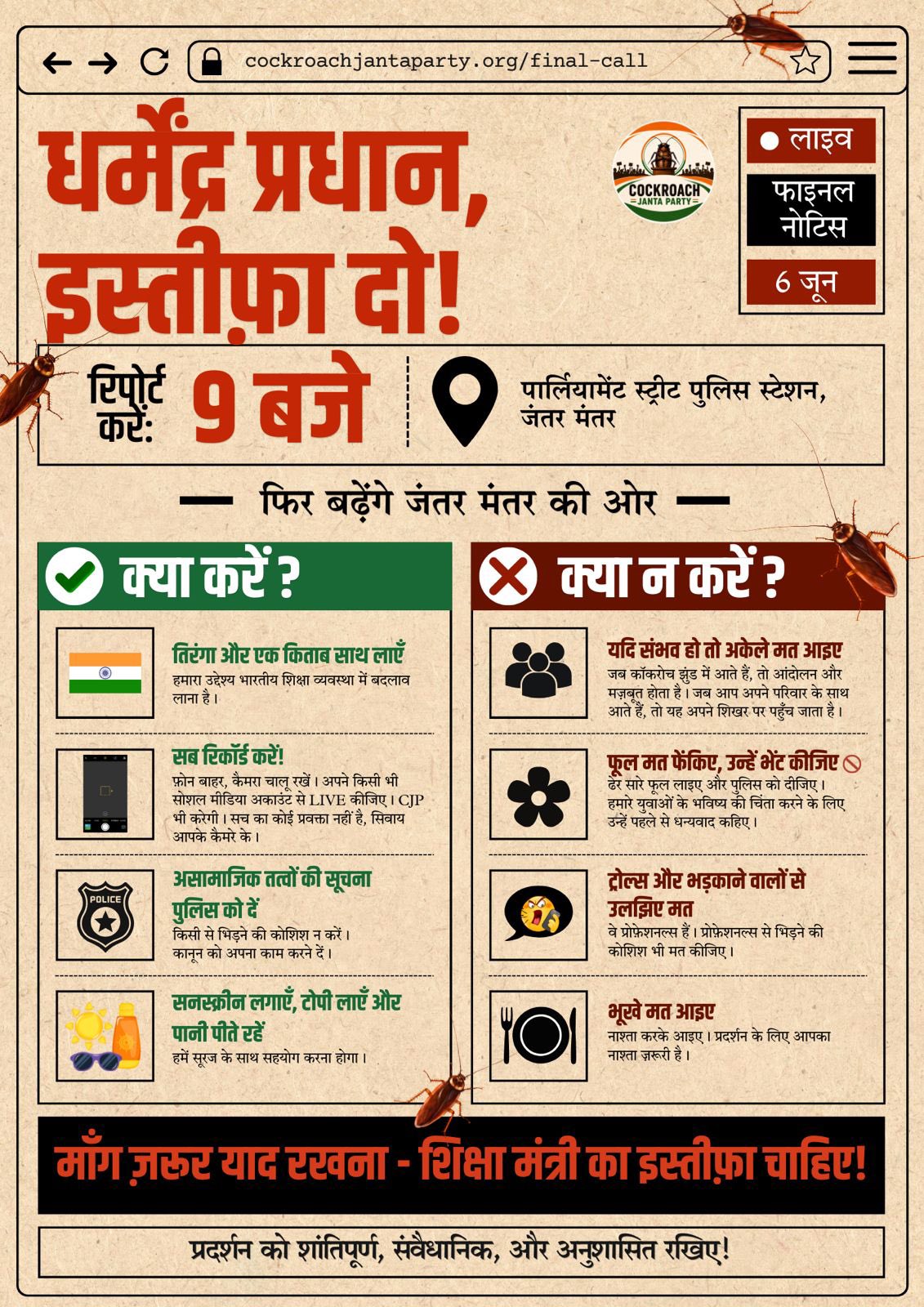
Cockroach Janata Party has issued guidelines for the protest scheduled to be held at Jantar Mantar in Delhi on 6 June. Photo: X.
What do these people hope to achieve by taking to the streets?
The Cockroach Janata Party’s primary demand is the resignation of Union Education Minister Dharmendra Pradhan.
In a video posted on X, Abhijit Dipke said: “Five students died by suicide following the cancellation of the NEET examination. Lakhs of students were affected by alleged irregularities in examinations such as CBSE, CUET and SSC. Protests were held in different cities across the country over these issues, yet Pradhan did not resign. Government accountability has effectively ceased to exist in this country. How long can this continue?”
CJP chief spokesperson Saurav Das has also claimed that more than 8 lakh people have already supported a petition posted on the party’s website seeking the Prime Minister’s resignation. According to Das, this demonstrates that students’ anger has now gone beyond the point of tolerance.
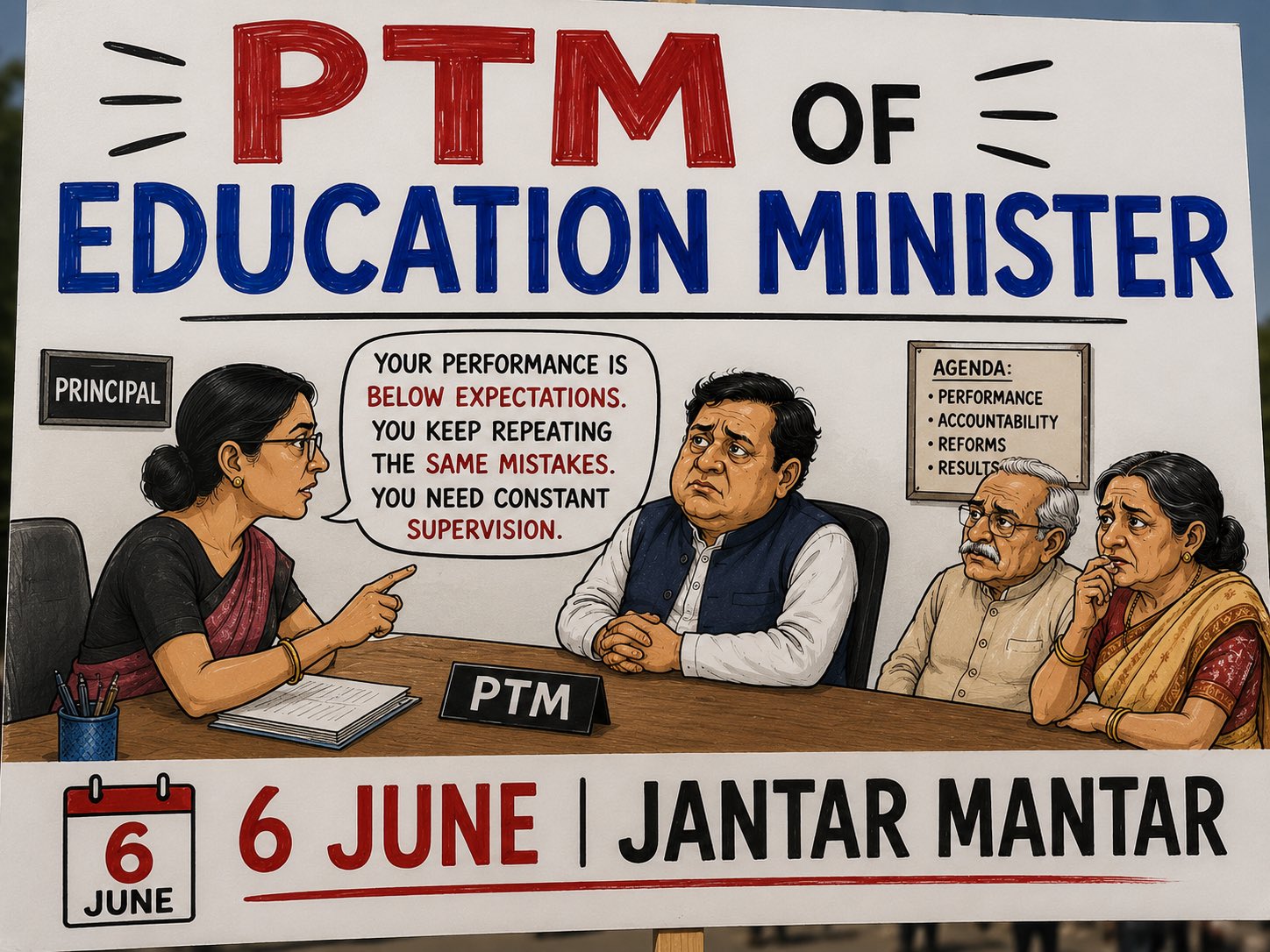
A cartoon posted on the Cockroach Janata Party’s X account on 3 June. The caption reads: “On what basis will you assess the Education Minister’s performance?”
Will permission be granted for the protest in Delhi?
The chances of obtaining permission appear to be slim.
Under Article 19 of the Constitution, “all citizens shall have the right to assemble peaceably and without arms”. Jantar Mantar in Delhi is the designated venue for public demonstrations. However, to avoid law-and-order issues, organisers are required to obtain written permission from the police at least seven days in advance.
According to Delhi Police guidelines, protests at Jantar Mantar may only be held between 10 am and 5 pm. Temporary tents are not permitted, and no more than 1,000 people may participate on a single day.
However, Abhijit is expected to approach the police for permission on behalf of the CJP on 6 June — the same day the protest is scheduled to take place. A large turnout is anticipated.
Party spokesperson Vijeeta Dahiya described the decision not to seek prior permission as part of the party’s strategy. He said: “There are strong public emotions behind this peaceful protest. People feel connected to Abhijit. That is why we decided that Abhijit himself would meet the police and seek permission. We hope the administration will allow the protest to go ahead.”
If Abhijit and his supporters attempt to protest without permission, they could be taken into custody. If the authorities receive indications that the situation may lead to public disorder, they can impose Section 163 of the Bharatiya Nagarik Suraksha Sanhita (BNSS) at the protest site. Under the former Code of Criminal Procedure (CrPC), this was known as Section 144.
Under this provision, the police can prohibit the assembly of five or more people. Such restrictions can remain in force for up to 60 days.
The Supreme Court has previously observed that such orders may be issued on the basis of intelligence inputs, even in the case of large public demonstrations, and that there is nothing unlawful about doing so.
Is there also an intention to form a political party? What would be required?
At the outset, Abhijit said he had no intention of forming a political party. However, the preparations for on-ground demonstrations, the appointment of spokespersons, the holding of press conferences and the involvement of prominent individuals have led many observers to see the movement taking on the characteristics of a political organisation.
Under Section 29A of the Representation of the People Act, 1951, a party seeking registration must apply to the Election Commission within 30 days of announcing its formation. The party must have at least 100 Indian members. It must also submit details of its constitution, organisational structure, the tenure of office-bearers and other relevant information.
There is, however, another twist. On 25 May, Sudhir Jakhar, a lawyer from Panipat in Haryana who describes himself as the National Convener of the CJP, applied to the Election Commission to register the organisation as a political party.
Explaining the move, he said: “When Dipke refused to come to India, we felt that if someone else registered the party and misused it, the entire movement would become futile. Therefore, we decided to take this step ourselves.”
Abhijit has not yet made any public statement on the matter.
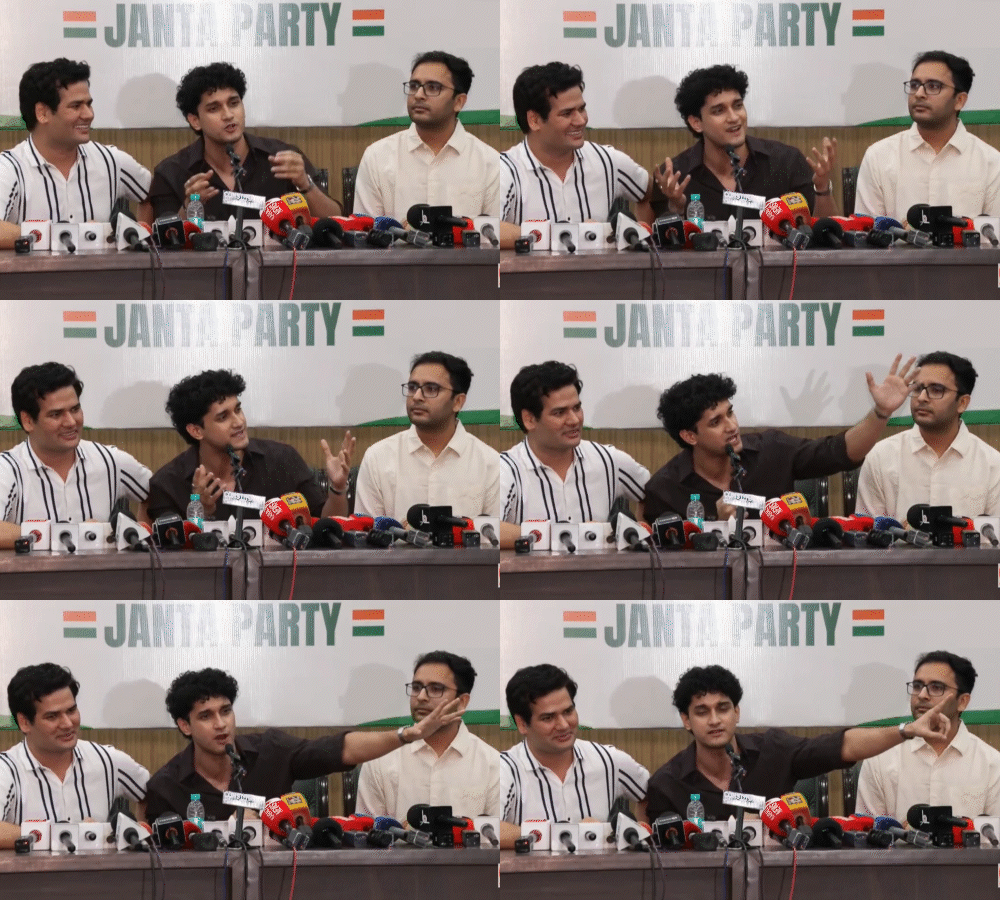
On 3 June, the CJP held its first press conference in Delhi. The event was addressed by party spokesperson and filmmaker Vijeeta Dahiya, investigative journalist Saurav Das, and IIT Kanpur alumnus Ashutosh Ranka.
If it becomes a political party, will its election symbol be a cockroach?
At present, a cockroach cannot be allotted as an election symbol.
Under the Election Commission’s Election Symbols (Reservation and Allotment) Order, 1968, newly registered political parties are allotted symbols from the ‘free symbols’ list. This list contains more than 200 symbols, including a landline telephone, laptop, television, lock and key, cauliflower, soap case and stapler.
Since 1991, the Election Commission has stopped allotting symbols associated with birds and animals. A cockroach falls within the insect category, and there is no clarity on whether it would be treated in the same manner as animals for the purpose of symbol allotment.
The CJP’s logo features a cockroach displayed on a mobile phone screen. However, obtaining a mobile phone as an election symbol would also be difficult, as it does not appear on the Election Commission’s current list of free symbols.
Will Abhijit Dipke become its president? What is his background?
So far, Abhijit Dipke has been the public face of the CJP. The preparations for his arrival in India and the party’s recent press conference suggest that he is likely to remain the movement’s central figure.
The 30-year-old digital media strategist is originally from Sambhaji Nagar in Maharashtra. He studied journalism in Pune and is currently pursuing a Master’s degree in Public Relations at Boston University in the US.
Between 2020 and 2022, Dipke worked as a social media strategist for the Aam Aadmi Party (AAP). During the 2020 Delhi Assembly election campaign, he helped create meme-based digital content that gained significant traction online.
Dipke reported to Ankit Lal, who headed AAP’s IT cell at the time. In an interview, he said that he left the party in pursuit of greater financial stability and personal growth before applying to Boston University and moving to the US.
Over the years, Dipke has used his X account to comment on a range of issues, from the farmers’ movement to concerns such as inflation, often criticising the central government and Prime Minister Narendra Modi.
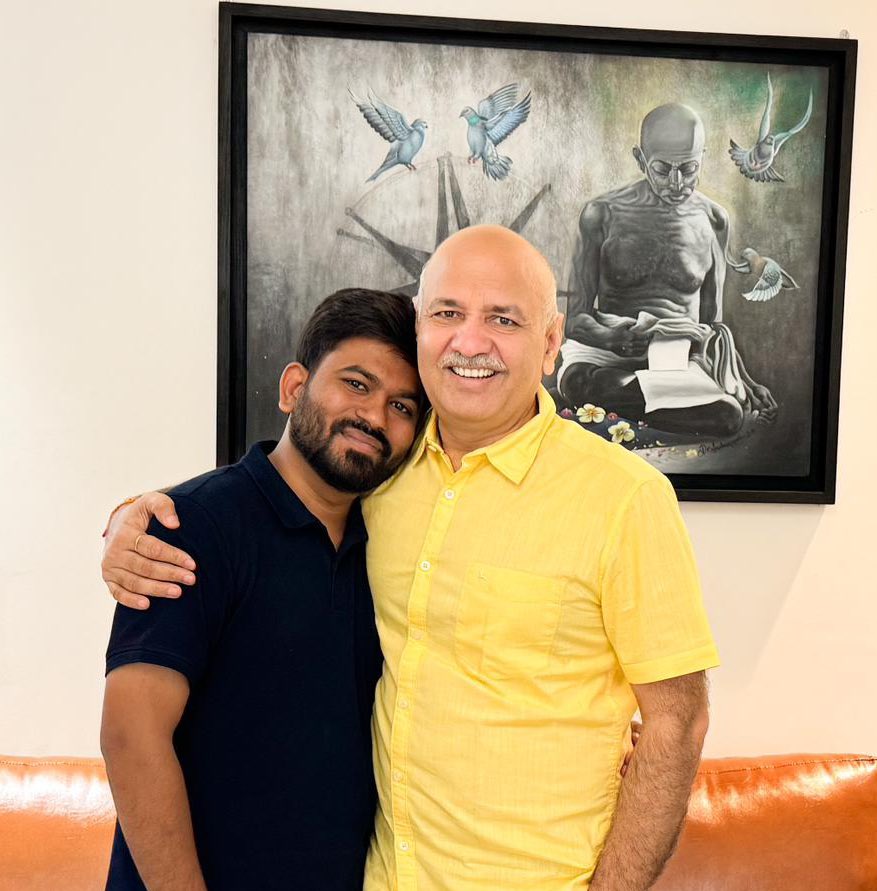
CJP founder Abhijit Dipke with Aam Aadmi Party leader Manish Sisodia. Abhijit shared this photograph on X before leaving for Boston to pursue his Master’s degree in August 2024. Photo: X.
Apart from Gen Z, which prominent figures are associated with the CJP? Is it receiving funding from anywhere?
Several well-known personalities are expected to support or participate in the CJP’s protest on 6 June.
Sonam Wangchuk, education reformer: On 2 June, Wangchuk released a video on X announcing his support for the movement. He said: “I am coming to join the CJP movement. The people of the CJP are patriots, and you should join them too.”
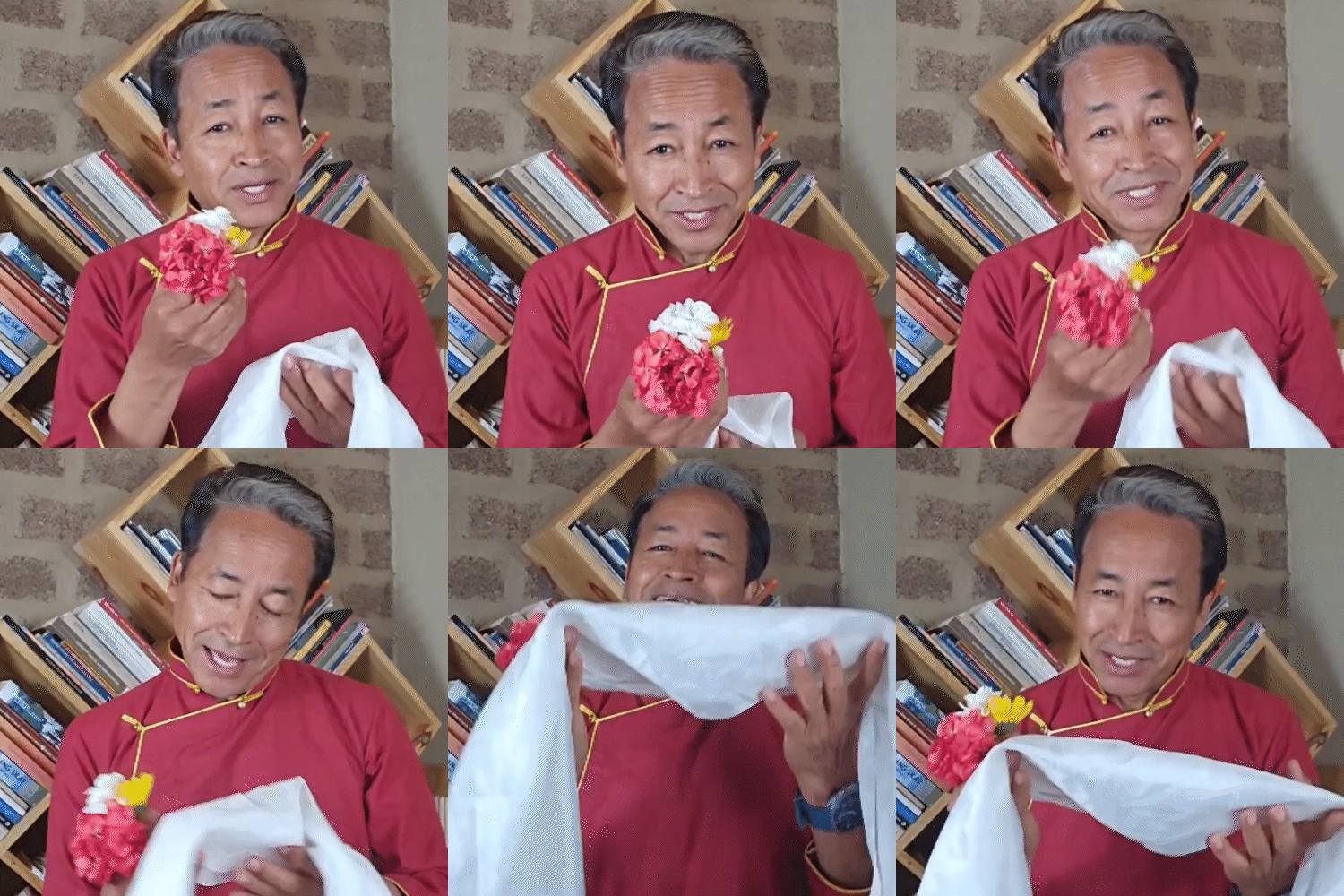
Education reformer Sonam Wangchuk released a video on 4 June urging CJP supporters to bring flowers for police personnel. Source: X.
Prakash Raj, actor: Actor Prakash Raj wrote on X: “I am currently far away from Delhi due to a film shoot, but I will do my best to reach the CJP protest.”
Amit Jogi, President of Janta Congress Chhattisgarh (JCC): Amit Jogi, son of Chhattisgarh’s first Chief Minister Ajit Jogi and president of the JCC, said: “In Chhattisgarh, a cockroach is called a jhengura, and the jhengura is now heading to Jantar Mantar. We will become the first political party in the country to support the CJP.”
In addition, actor Atul Kulkarni, former Delhi University Students’ Union president Raunak Khatri and Students’ Federation of India (SFI) president Aishe Ghosh are also expected to participate in the protest.
So far, there is no concrete evidence regarding any source of funding for the CJP. On 3 June, spokesperson Saurav Das said: “Why would we need funding? The party poster behind us costs ₹200, and people can attend the protest at their own expense. This narrative is being created to distract attention from the movement.”
According to the CJP’s official website: “The party operates entirely through community funding, meaning contributions from people associated with the movement. It will not accept donations from any political organisation or private company.”
What is the government’s stance on the Cockroach Party?
Abhijit Dipke and the CJP have faced allegations of receiving support from anti-national elements and foreign sources. India’s Intelligence Bureau (IB) reportedly provided inputs recommending action against the CJP’s original X account.
According to those inputs: “The inflammatory content being circulated by the handle was spreading among the country’s youth and could pose a threat to national security.” Following this, the government directed X to block the account in India.
On 22 May, BJP MP Nishikant Dubey wrote on X: “Who funded Abhijit’s move to Boston? Is the Soros Foundation paying for his accommodation and food? Are opposition parties taking help from foreign forces to break the country?”
In such circumstances, the government may be reluctant to allow the 6 June protest to proceed. The administration could cite regulatory requirements, and if conditions are violated or violence occurs, Abhijit and his supporters could be taken into custody. However, such action could also generate a wave of public sympathy for the Cockroach Party.
Another possibility is that the government permits the protest and treats the Cockroach Party as a satirical movement, thereby denying it the attention that might come from a confrontation.
Is there currently space for such a party in Indian politics?
The timing of the Cockroach Party’s emergence and the issues it has chosen to highlight have made it relevant to contemporary political debates.
Political analyst Yogendra Yadav said: “There is a sense of restlessness in the country. When a government captures institutions and establishes overwhelming power, opposition often emerges from unexpected places. After Indira Gandhi’s landslide victory in 1971 came the Jayaprakash movement in 1974. After the Congress victory in 2009 came the Anna movement in 2011. And two years after Prime Minister Modi returned to power in 2019, the farmers’ movement emerged.”
Meanwhile, Congress MP Shashi Tharoor said: “Young people are disappointed, which is why they are connecting with this movement. The hope is that those behind it will either channel this energy into mainstream politics or become a force for change through the democratic process.”