

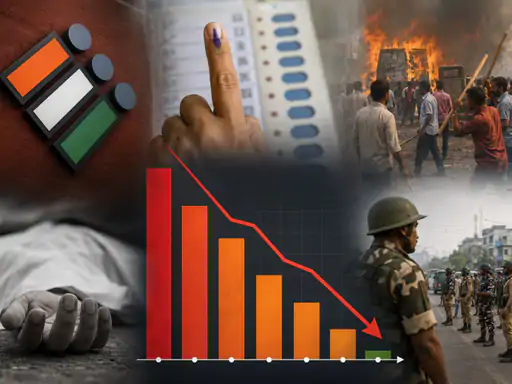
West Bengal’s notoriety for post-poll violence that saw its peak in 2021, has seen a significant drop this year, with robust security arrangements – breaking a long-standing pattern of violent reprisals consistently witnessed over the years after poll results.
This year, too, there has been incidence of violence but at significantly lower numbers.
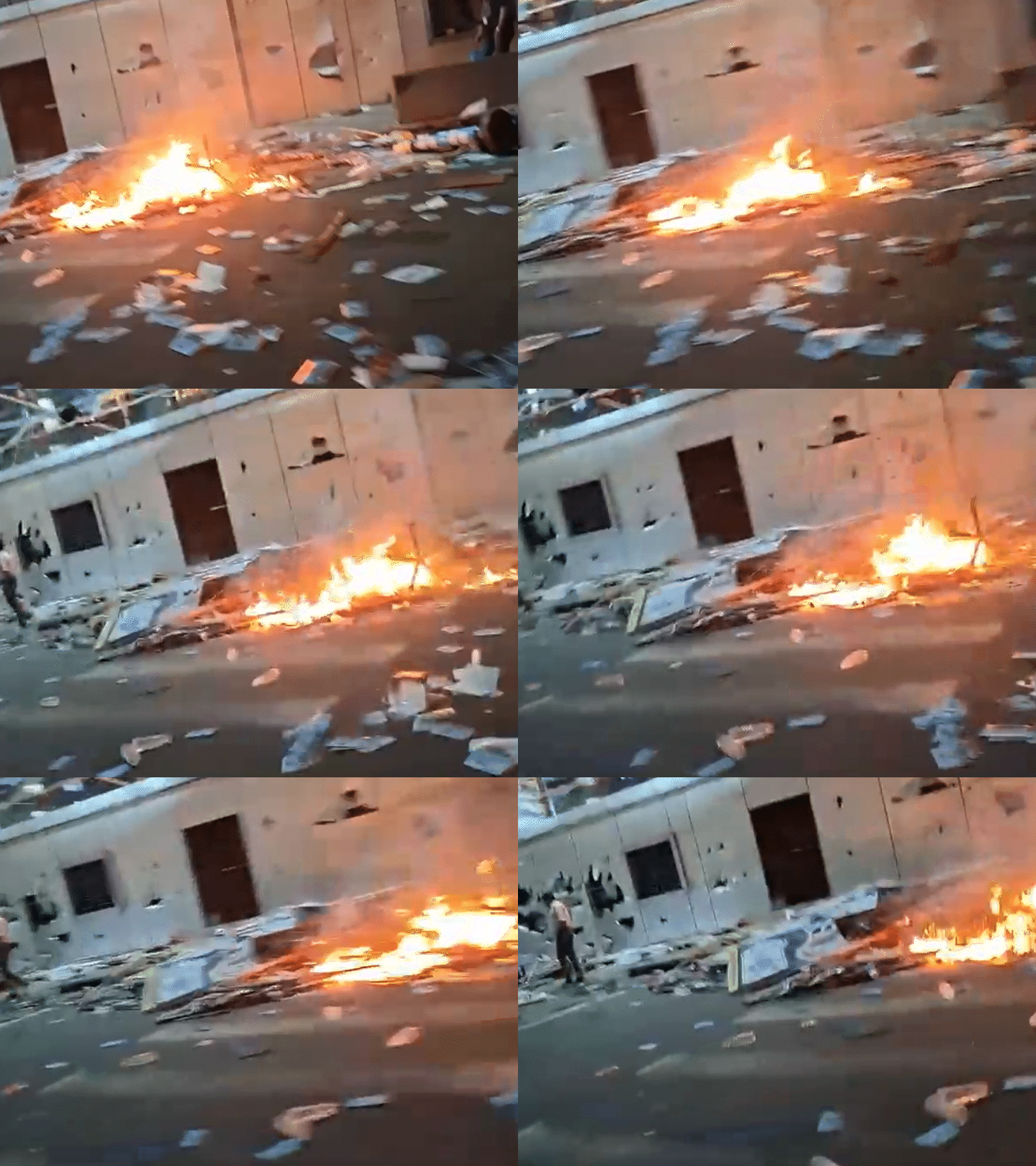
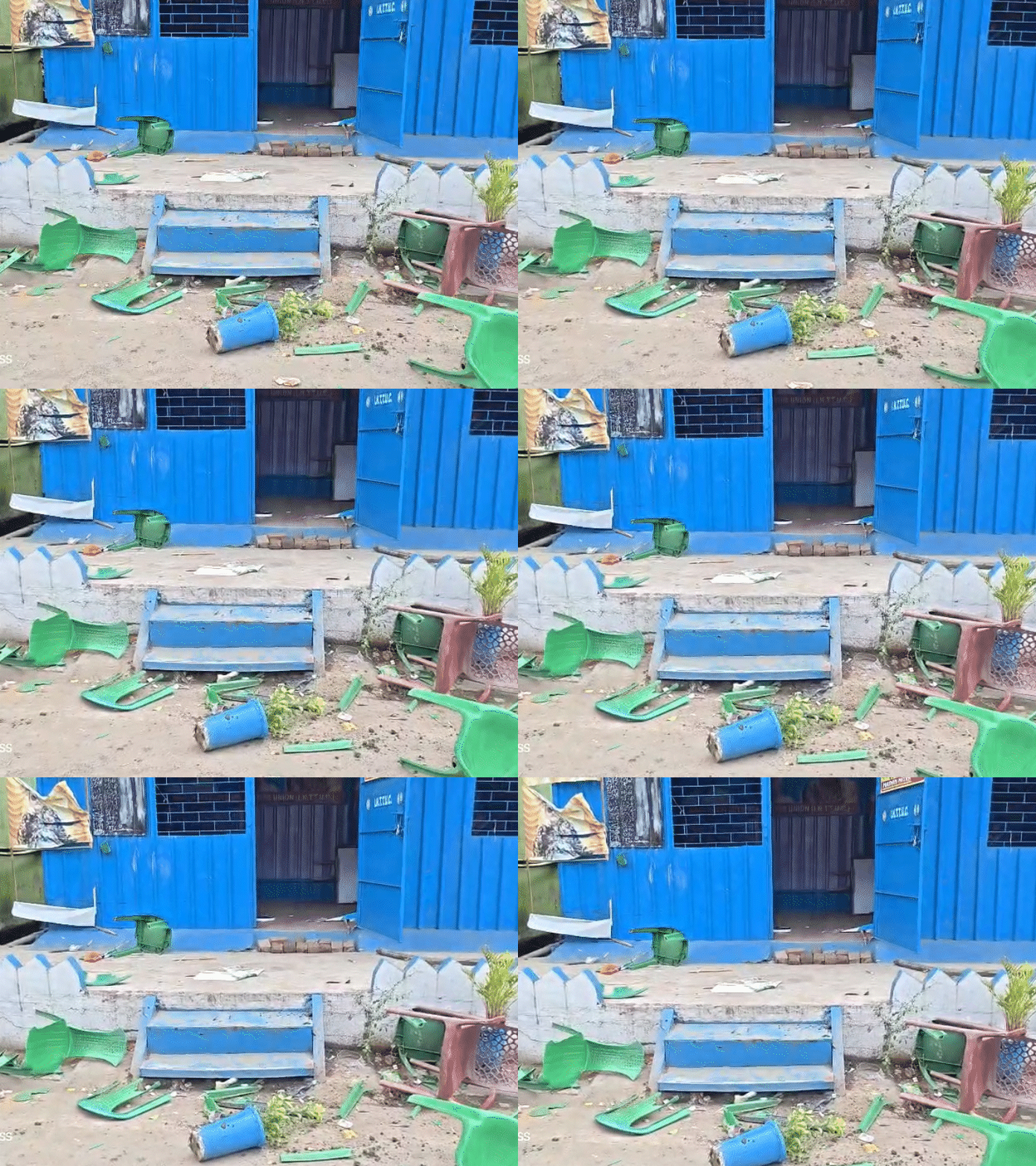
Within hours of the 2026 results, allegations surfaced of attacks on Trinamool Congress offices with reports of arson and injuries widely being circulated on social media.
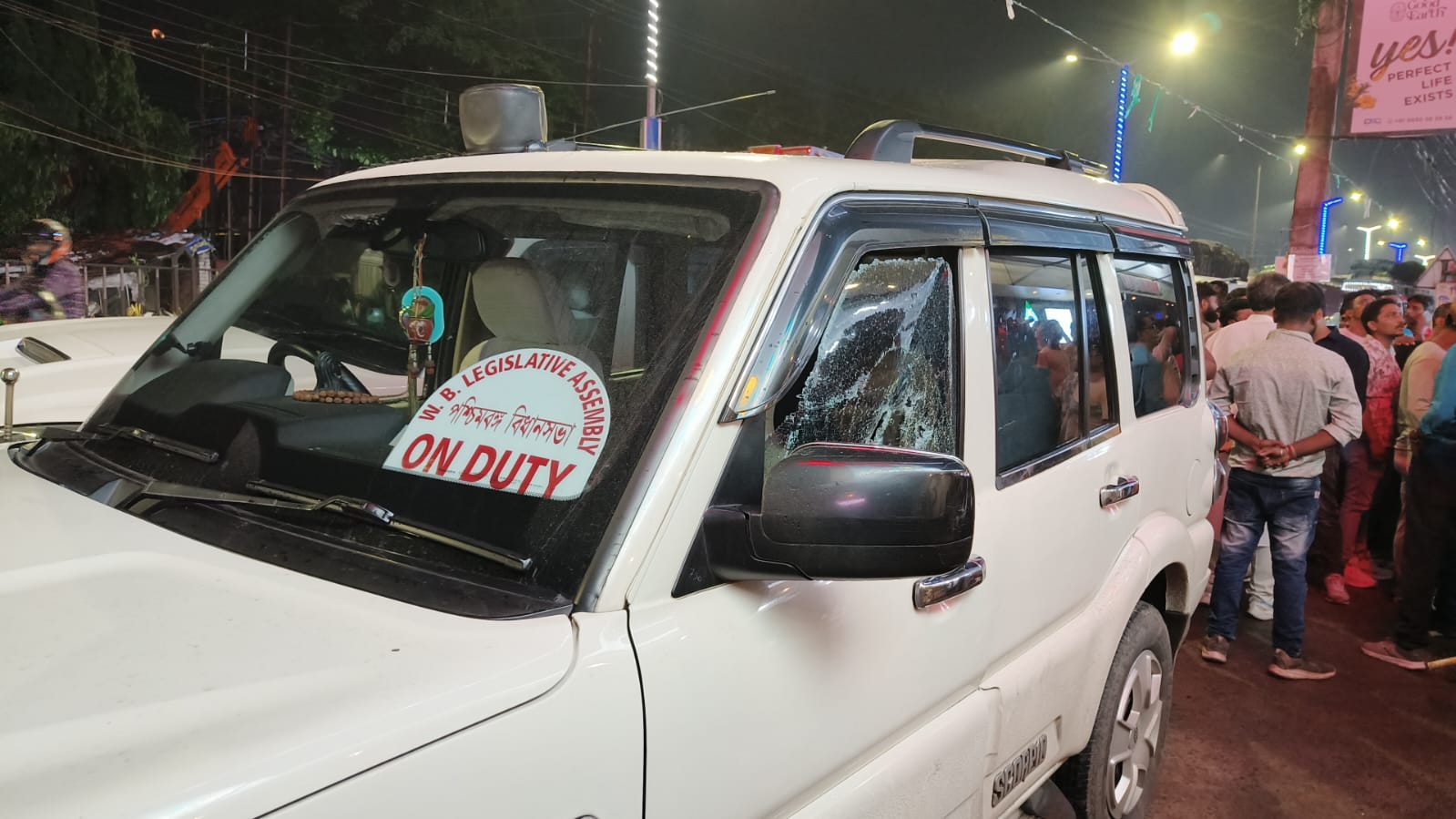
Clashes, tensions witnessed in different parts of Bengal
In the immediate aftermath of the results, authorities launched a large-scale crackdown on troublemakers. Police registered around 200 cases, made arrests in over 430 incidents, and carried out preventive detentions of more than 1,000 individuals.
At least four deaths were reported in post-poll violence.
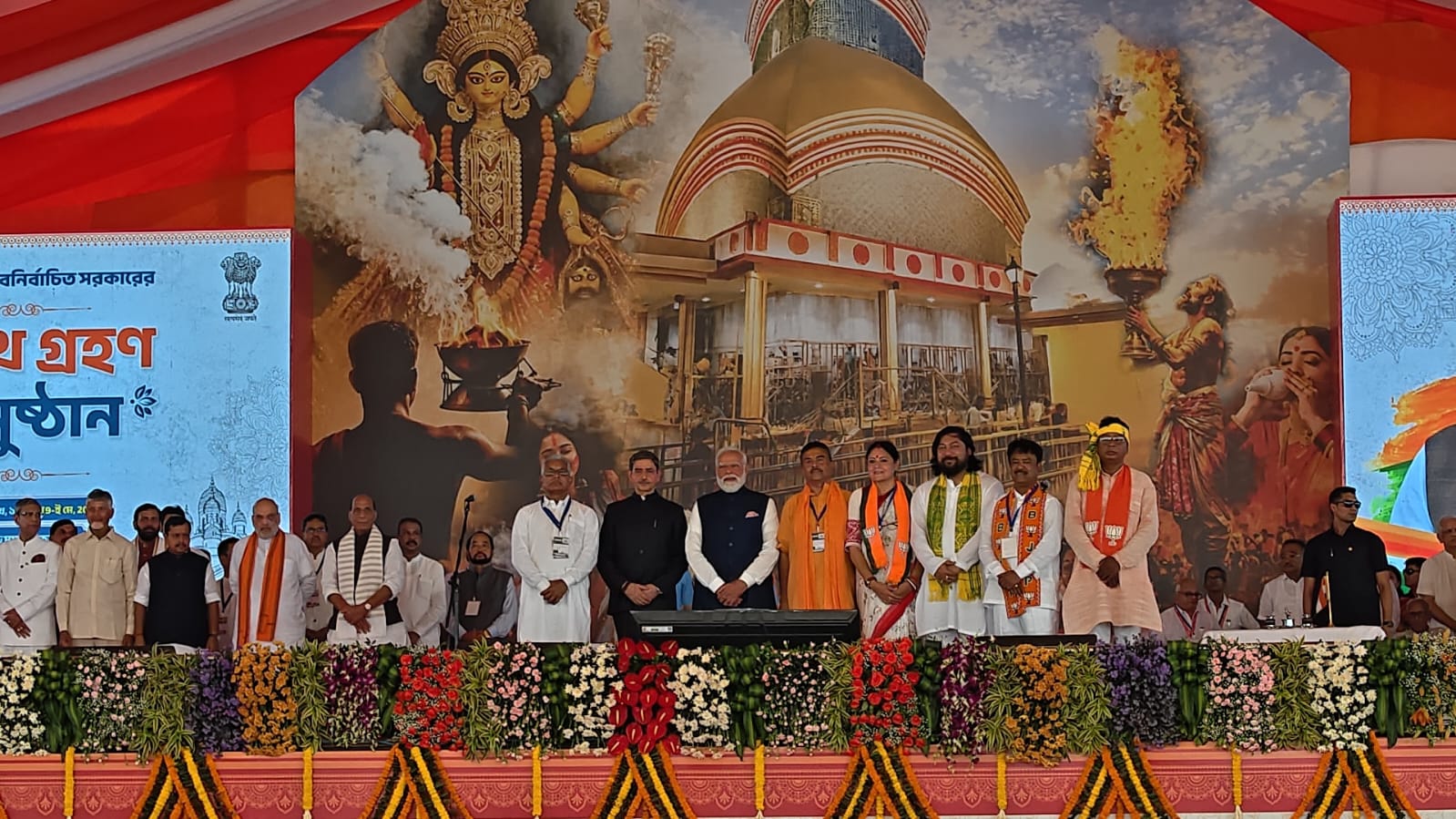
Tensions rose on May 6 after Chandranath Rath, the personal assistant and close aide of Suvendu Adhikari, who was later sworn in as Chief Minister, was shot dead by unidentified motorcycle-borne assailants near the Kolkata airport.
‘Badla’ (revenge) vs ‘Badlav’ (change) narrative
Political parties framed the situation through competing narratives “badla” vs “badlav”. Analysts argue that a deeper structural transformation is being overlooked.
According to observers, what unfolded in 2026 was not just a change in government, but a deeper political shift involving the decline of long-standing dominant political structures and the emergence of new power equations in the state.
2021 violence sharply contrasts peaceful 2026
Political violence in Bengal has often been interpreted as a law-and-order failure, but scholars argue it has historically functioned as a mechanism of political control and survival. Against this backdrop, the 2026 Assembly election stands out as a major departure from the 2021 post-poll situation.
In 2021, Bengal post-poll violence triggered nationwide concerns after clashes, killings, arson and intimidation were reported from multiple districts. A National Human Rights Commission report documented around 1,900 incidents, including 29 murders, sexual assaults, grievous injuries, large-scale arson and widespread intimidation.
Central forces credited for peaceful 2026 elections
The 2021 election recorded at least 17 poll-related deaths, with opposition parties alleging targeted attacks after the poll results.
In sharp contrast, the 2026 Assembly election recorded only four deaths and no serious injuries during polling and in the immediate post-result phase, marking it as the most peaceful election in the state in over two decades.
Security deployment played a key role in this shift. In 2026, the massive deployment of central armed forces, including the CRPF, across sensitive constituencies reduced allegations of booth capture, intimidation, and violent clashes. The Election Commission (EC) also emphasised violence-free, intimidation-free, and interference-free polling conditions.
Unlike 2021, when allegations of delayed response and enforcement gaps surfaced repeatedly, the 2026 election witnessed tighter surveillance, rapid deployment and stronger central monitoring in sensitive areas.
Historically, Bengal’s electoral cycle has been marked by recurring violence. Between 2006 and 2024, nearly every major election witnessed fatalities linked to political clashes. The 2018 Panchayat elections recorded 75 deaths, while the 2023 Panchayat polls saw 57 deaths.
Against this backdrop, the complete absence of fatalities in 2026 represents a significant deviation from the past in post-poll violence, which analysts describe as a shift in Bengal’s electoral violence pattern. Whether this change sustains in future elections remains an open question.