

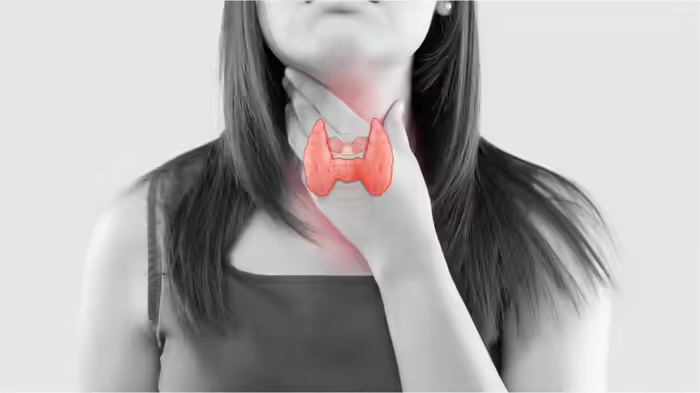
When the thyroid fails to function properly, it can cause a wide range of health problems throughout the body. Therefore, it is important to pay special attention if there is a family history of thyroid diseases.
Thyroid-related problems are on the rise among most people these days and they are not just lifestyle-related diseases. In many cases, these conditions have a family background. If one family member suffers from thyroid disease, the risk of other family members developing the condition may also increase. This does not mean that every member of the family will inevitably develop the disease, although their risk is higher compared to the general population. Although the thyroid is a small gland, it has a profound impact on the entire body.
Do thyroid diseases run in families?
Thyroid diseases, especially autoimmune thyroid diseases, often run in families. Conditions such as Hashimoto’s thyroiditis and Graves’ disease are examples of autoimmune disorders, in which the body’s immune system mistakenly attacks the thyroid gland. Genetic factors play a significant role in the development of these diseases.
According to a report published in NCBI Bookshelf in 2013, genetics plays a major role in the pathogenesis of autoimmune thyroid disease (AITD). Several genes have been identified that influence the immune system and, in doing so, increase the risk of developing the disease. Specifically, genes such as HLA-DR3, CTLA-4, and CD40 are strongly associated with AITD. In addition, genes such as PTPN22, FOXP3, and CD25 can alter the body’s immune response, facilitating the process of the immune system attacking the thyroid gland.
This research suggests that while some genes increase the risk of the disease, others may actually provide a protective effect. Overall, AITD is a complex condition involving the interaction of multiple genes that collectively disrupt the balance of the immune system. This means that if someone in your family has thyroid problems, you should be cautious, but there is no need to panic. This risk can be managed to a significant extent with the right information and timely screening.
Who is at higher risk?
Thyroid problems are more common in some people than others. They are more common in women than in men; the primary reason for this is the hormonal changes that occur in the female body. During periods such as puberty, pregnancy, and menopause, hormonal balance can be disrupted, This affects the thyroid gland. The risk of thyroid-related problems begins to increase after the age of 30. If a person has a family history of thyroid disease, the condition may manifest at an earlier age.
It is more common in women
According to a review article published in JAMA Network in 2021, thyroid disorders are more common in women than in men, largely due to differences in their immune systems. In many cases, the condition develops into an autoimmune disease, in which the body’s own immune system attacks the thyroid gland.
The presence of antibodies does not always indicate the presence of the disease, as they are often detected in individuals who do not display any symptoms. Different stages of a woman’s life – adolescence, pregnancy and menopause – influence thyroid function and can affect the timing of the onset of the disease. In addition, genetic and environmental factors also play a significant role.
